Discover · Ouidah, Benin
Where it allbegan.
The City
An open-air museum. Alive.
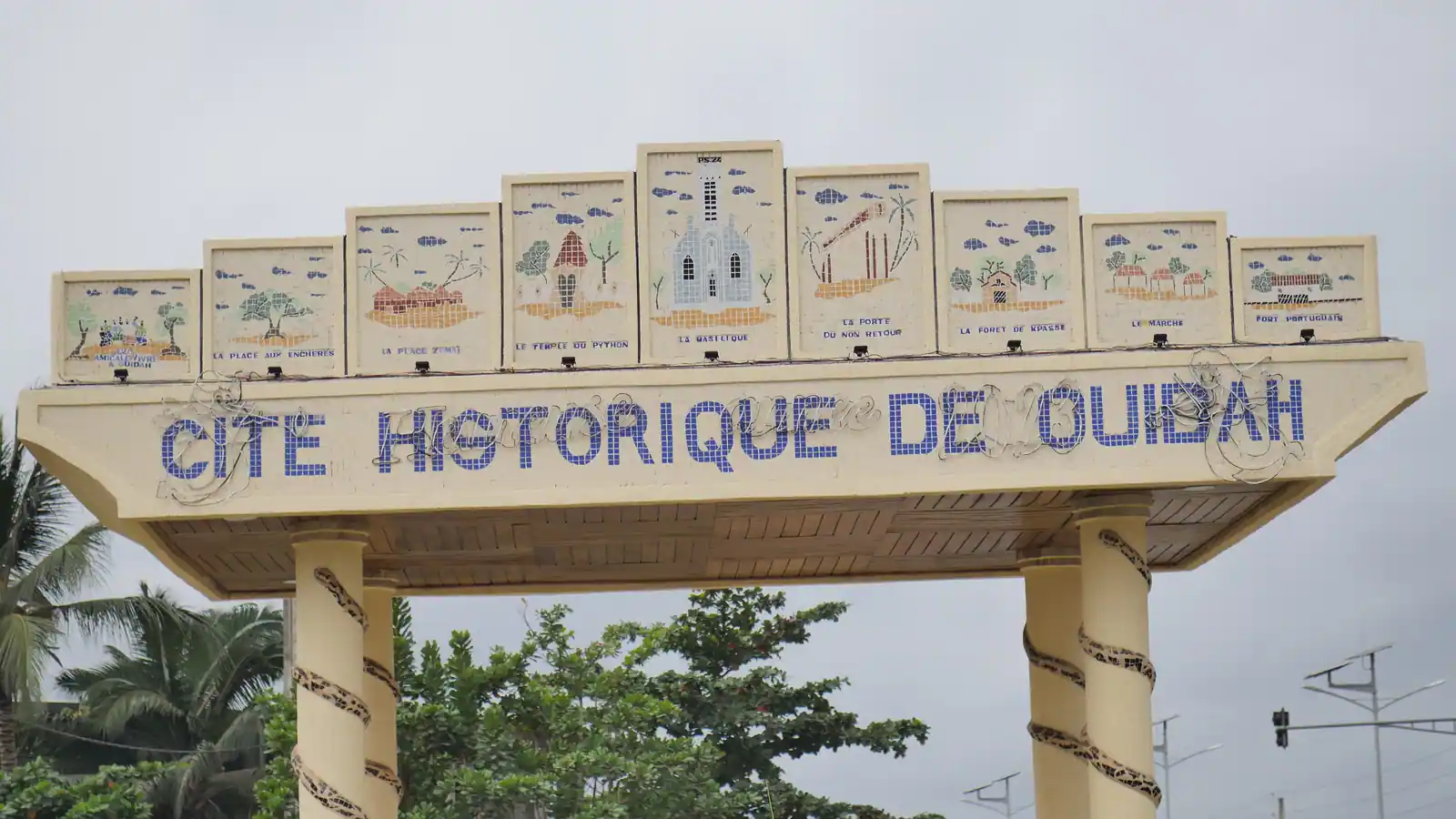
Ouidah sits between the lagoon and the Atlantic Ocean, 42 kilometers west of Cotonou. Wide streets, Portuguese and Brazilian colonial facades, forts, temples, sacred convents, memorial monuments, the entire city is a permanent open-air collection that no one had to reconstruct, because it never stopped existing.
For three centuries, the coastal kingdoms negotiated here with the European powers, Portuguese, Dutch, French. Through this port, a large part of Africa was sent to the other side of the world. Ouidah has not forgotten. And that is exactly why people come back.
Here, every neighborhood has a history. Every street carries a name. Every colonial building, every Vodun temple, every sacred space tells an era, a family, a civilization. What you walk through is not a reconstruction, it is the real thing, intact, that chose to remain.
The City
The Slave Route
Four kilometers of memory.
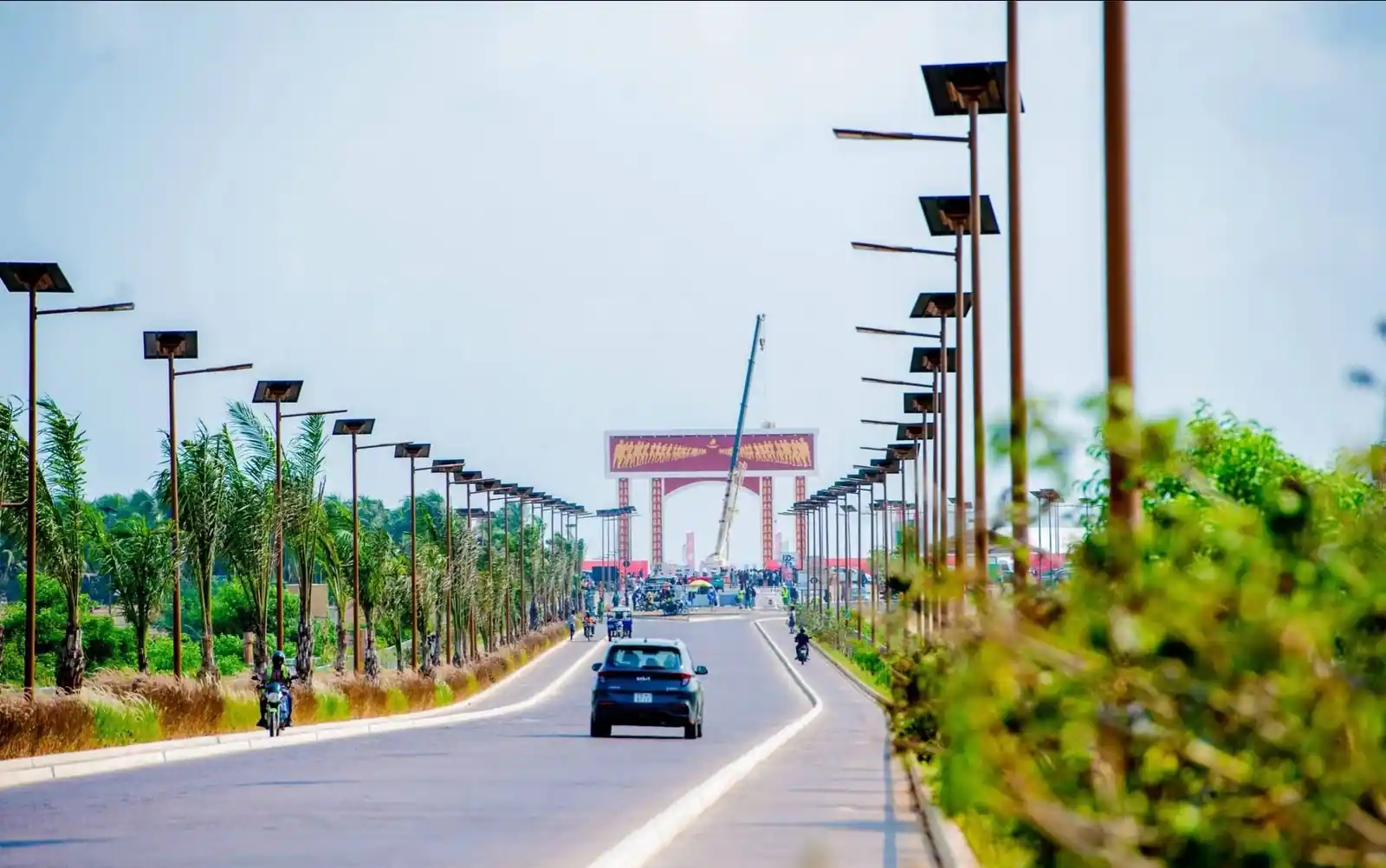
The Slave Route links the center of Ouidah to the Atlantic beach. Four kilometers. It is the path millions of men and women walked before being shipped to the Americas, the Caribbean, Haiti, Brazil, Cuba.
At the end of this route, facing the ocean: the Door of No Return. A monument erected in 1992 during the World Conference on the Slave Route organized by UNESCO in Ouidah. It marks the exact point where the deported passed from land to sea, from Africa into the unknown.
Standing before this door is an experience language does not really prepare you for. Some people cry. Some say nothing for hours. Some understand, in that moment, why they came. That is why this route sits at the center of everything ONG Wa Afriki organizes: not to display a wound, but to let those who wish to name it.
The Route recently underwent a complete redevelopment: international signage, smart solar lighting, landscaping. The Zoungbodji Memorial and the Auction Square have been upgraded. A bid for UNESCO World Heritage listing is underway, jointly carried by Benin and several nations of the Atlantic diaspora.
The Slave Route
The Sacred Forest of Kpassè
A place older than the cities around it.
A few hundred meters from the center of Ouidah, the Sacred Forest of Kpassè covers several hectares of dense vegetation, listed as national heritage. It is the city's esoteric heart. Tradition holds that King Kpassè, founder of Ouidah, transformed himself into an iroko tree to escape his enemies. That tree is still alive today, prayed to and fed.
There you will find statues of Legba, guardian of crossroads and passages. Altars dedicated to major deities, Gou, Sakpata. Century-old trees whose branches no one cuts. The forest is also an open-air laboratory of African pharmacopeia: every leaf, every bark has a medicinal or protective function known only to initiates.
During ceremonial season, rituals are held there that only ONG Wa Afriki's guides can grant you access to. The forest is not visited like a park. You enter it aware that something here is older than you are.
The Sacred Forest of Kpassè

Ouidah Today
An open-air museum. Inhabited.
Ouidah is a genuine open-air museum, but one where people live. The central market comes alive at dawn. Children come home from school in the mid-afternoon. Fishermen return from the beach with whatever the Atlantic chose to give. History is not displayed behind glass here, it circulates through the streets.
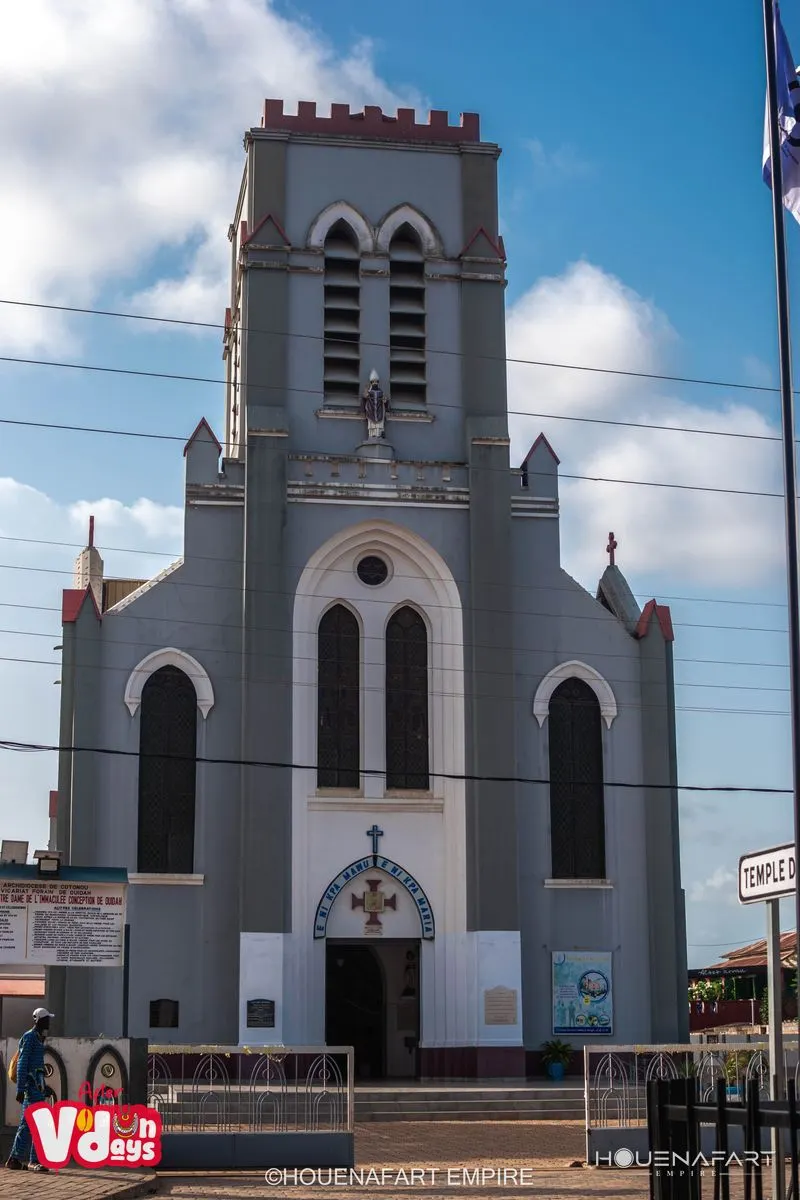
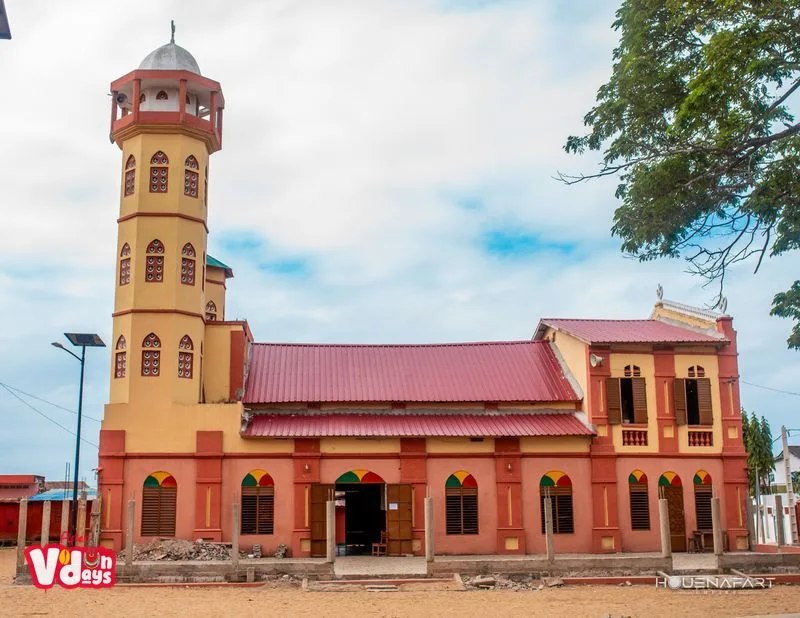
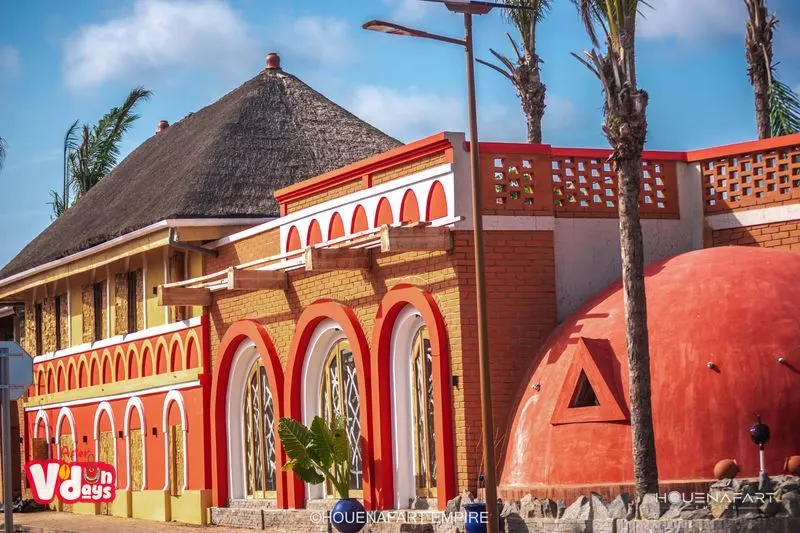
Portuguese colonial architecture is still here, sometimes restored, often intact in its age. Ouidah's history museum, housed in the old Portuguese fort, traced three centuries of trade and resistance for more than fifty years; the fort is now under renovation. Saint Francis Xavier Cathedral stands alongside Vodun temples without anyone finding that strange.
This quiet coexistence, the sacred and the everyday, history and the present, Christianity and Vodun, modernity and tradition, is what Ouidah offers that is rarest of all. A living museum that no one designed, and that no one can replicate.
Ouidah Today
Ouidah in Motion
A city decision-makers have decided to stop ignoring.
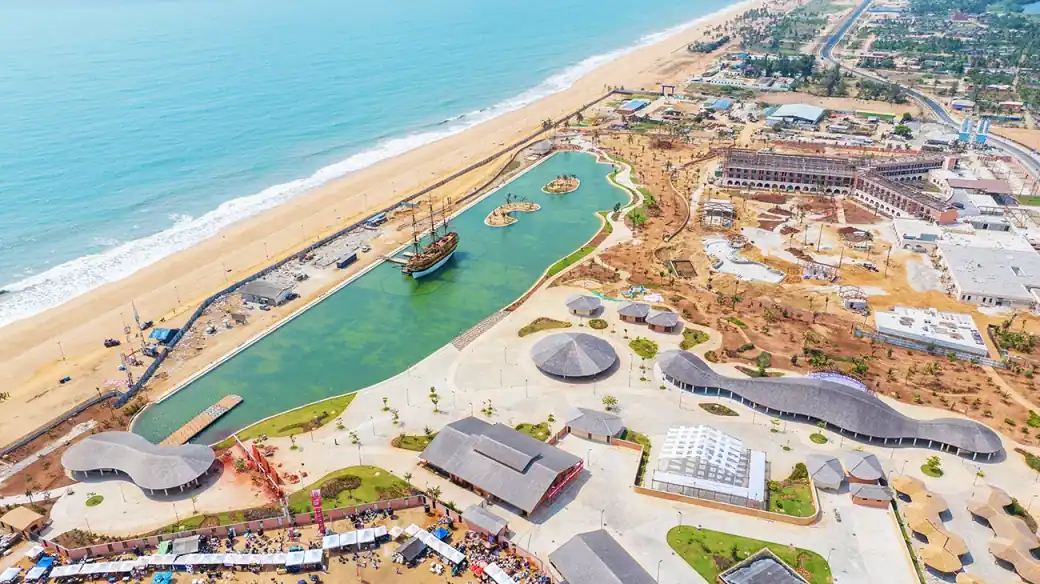
Benin's government has made Ouidah one of the pillars of its national tourism strategy. Under the Government Action Program (PAG), the city is receiving public investment on an unprecedented scale. The stated goal for 2030: cross 2 million foreign tourists a year and double tourism's share of Benin's GDP. Ouidah is its spearhead.
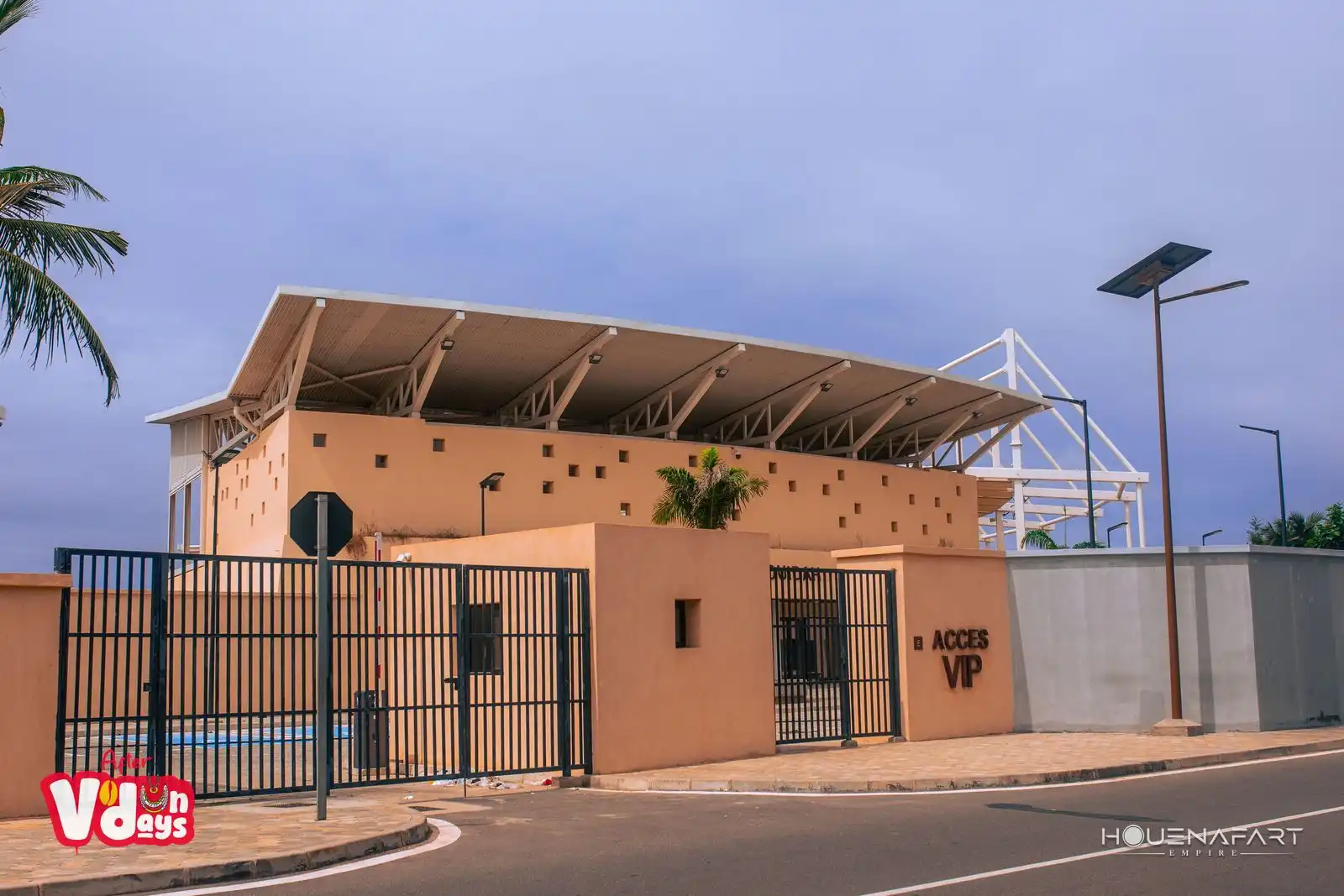
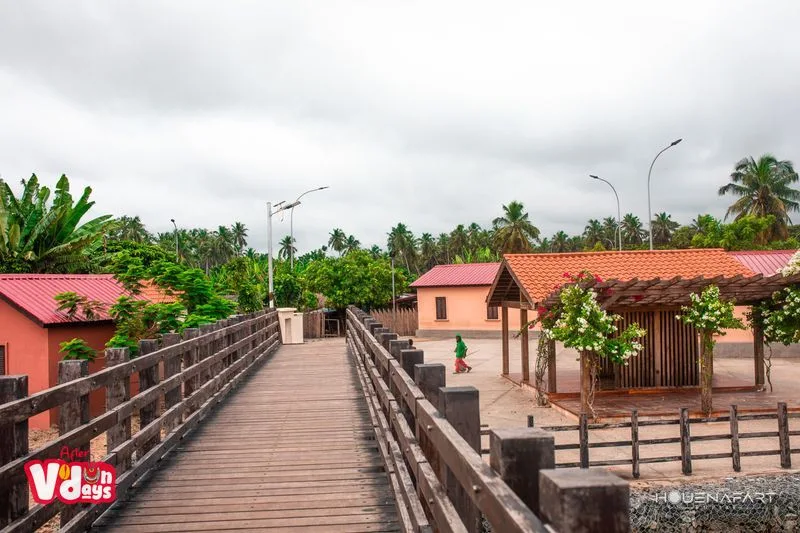
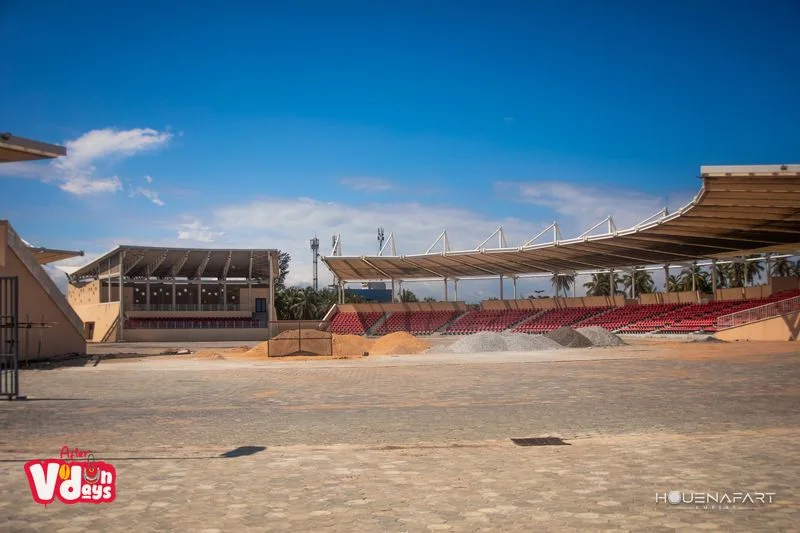
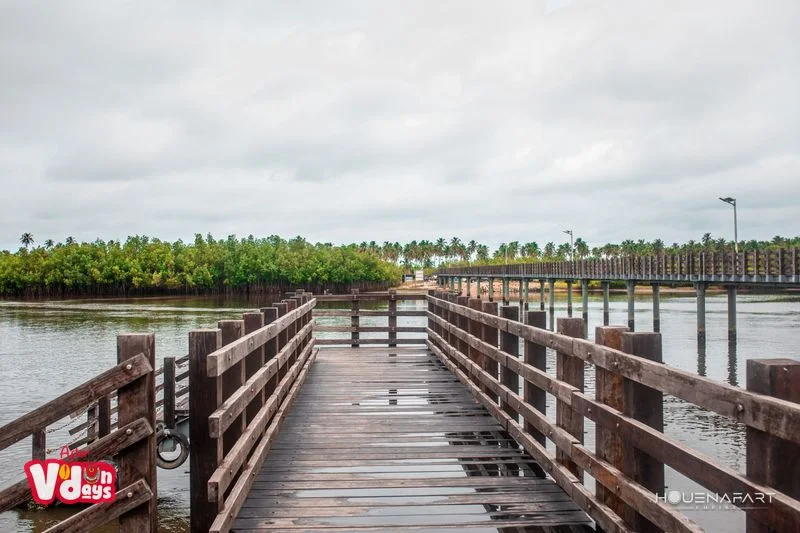
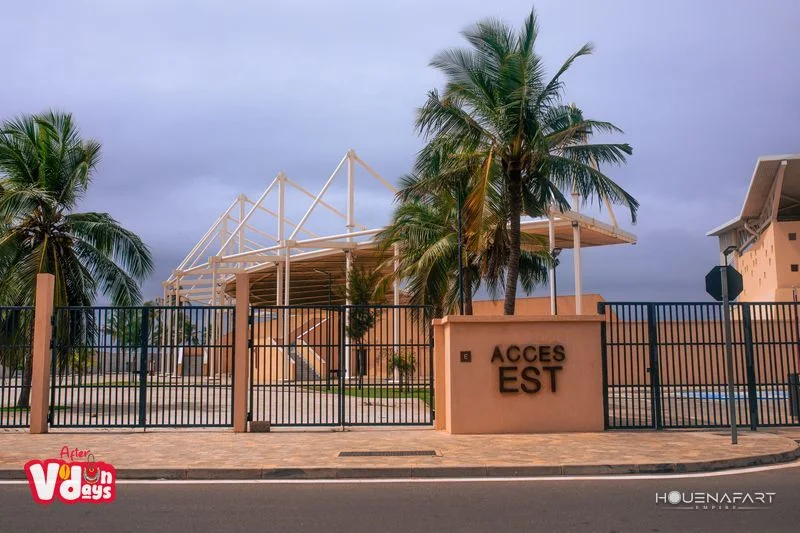
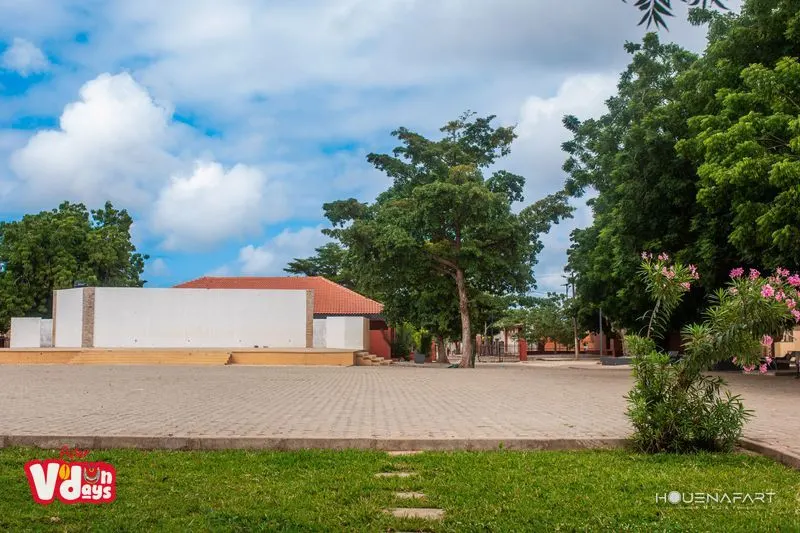
The most spectacular project is the Djègbadji Marina Tourism Complex, an investment estimated at over 117 billion FCFA on the coastline, facing the Door of No Return. It includes three centerpieces. The Departure Ship: a large-scale immersive reconstruction of a wooden slave ship, positioned on the lagoon, built with modern staging technology, 3D sound, projections, to retrace the captives' journey from the markets to the hold. The Vodun Arena: an open-air amphitheater designed for large cultural gatherings, removing the logistical overflow that used to limit the scale of public ceremonies. The Zomachi Craft Village: a commercial and cultural hub with art and craft shops, galleries, local food spaces, meditation gardens and an elevated walkway over the lagoon.
On the hotel side, Ouidah is changing scale. The Dhawa Ouidah, backed by the international Banyan Tree group, has opened its doors, putting the city on the map of premium global tourism with a level of service the region has never seen before. The Marina's themed hotel zone plans roughly 130 additional rooms to absorb diaspora traffic at peak periods.
The Route des Pêches Phase 2 opened up the coast: this paved road links Cotonou (Fidjrossè) directly to Ouidah along the ocean, turning what used to be an impassable sand track into a world-class coastal boulevard. The reconstruction of the Portuguese Fort, entrusted in part to major firms such as Yunnan Construction, includes a full restoration of its colonial buildings and ramparts to house the reorganized museum collections.
All of this creates a window. Ouidah is changing, but it has not yet been standardized, nor turned into a theme park for rushed tourists. This moment, between international recognition and the preservation of authenticity, is exactly the one to come for.
Ouidah in Motion

The Living Invisible
What you will not find on any postcard.
Government investment is building the setting. Ouidah's real wealth, its beating heart, is its intangible heritage. It cannot be locked behind glass. It is passed down generation to generation through rites, rhythms and sociological structures the city has preserved for centuries.
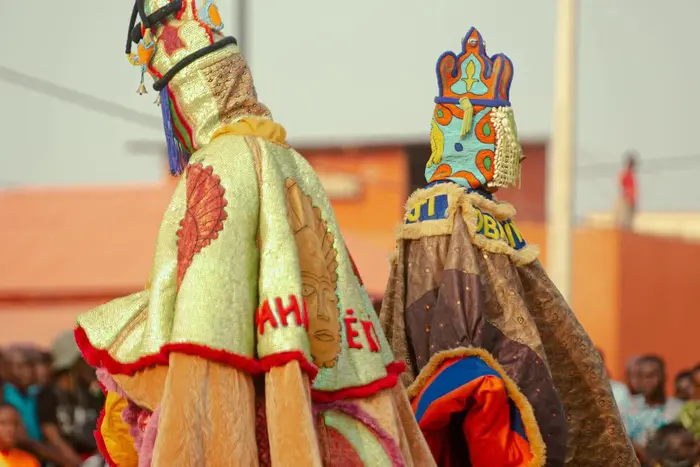
The Egungun: ancestral spirits return to earth wrapped in rich, beaded, colorful cloths. Their outings in Ouidah are true ritual and theatrical performances, governed by very strict codes of dance. The Zangbéto: whirling conical straw structures, they represent the mystical police of the night. Their art of transformation, and their public displays of strength, is unique on the continent. Mami Wata: the water deity, ever-present on the Djègbadji coast. Her rituals, her specific chants and the immaculate white worn by her followers set the rhythm of coastal life. The Dangbé Python: a symbol of protection and peace. The python is a respected totem deity, never killed, only escorted back if it strays into a house.
The Fa may be the most misunderstood heritage from the outside. It is not fortune-telling. It is a science of life, a code of conduct, a decision-making tool used by elders and modern executives alike before launching major projects. Its practitioners are scholars of a knowledge thousands of years old. The Akòvò chants, memorial praise-songs, trace the genealogy of the great families (Xwéda, Fon, Afro-Brazilian) during ceremonies, reminding the living where they come from.
Beyond the convents open to the public, Ouidah holds the Hounkpame of high dignitaries: secret spaces where initiatory death takes place. Novices enter to learn a secret language, codified dances and healing rituals the rest of the world knows nothing about. This absolute secrecy has guaranteed the tradition's survival for centuries, in the face of imported religions and accelerated modernization.
The Living Invisible
Hospitality
The stranger is king. That is not a figure of speech.
Hospitality in Ouidah is not a commercial concept invented for tourism. It is a spiritual duty tied to the city's history, a land of welcome, mixing and reunion for three centuries. In local tradition, the stranger is seen as a blessing or a messenger of the divinities.
The Sin dondon ritual, the water of welcome, systematically opens the doors of a home, instantly breaking the distance between host and visitor. It is the first gesture. Before the words. Before the questions. Those who have received it immediately understand that something here works differently.
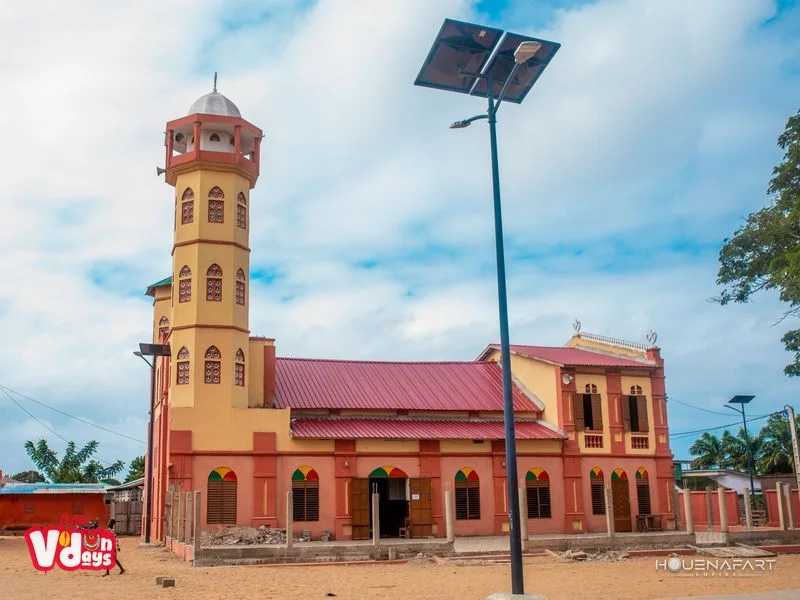
This may be one of the few places in the world where an Immaculate Conception Basilica stands directly across from the Python Temple. That religious tolerance creates a unique climate of human safety and goodwill: Christians, Muslims and traditionalists share the same families and celebrate each other's holidays together. No one decided this was remarkable, it is simply how the city has always worked.
For the Afro-descendant diaspora, Ouidah's hospitality takes on an added dimension. The city turned its tragic past, the Door of No Return, into a place of reconciliation. Purification rituals led by traditional chiefs offer visitors a journey that becomes collective therapy. You come to name the wound. You leave grown, reconnected, celebrated. What visitors consistently report is a total absence of animosity, as if Ouidah had collectively decided that resilience was a form of dignity.
Hospitality

The Agudás
Bahia and Ouidah, on the same street.
Ouidah holds an anthropological feature found nowhere else in West Africa: the Aguda community. They are the descendants of freed slaves who returned from Brazil in the 19th century. The de Souza, do Rego, d'Almeida, da Silva, Martinez families, families whose names sound Portuguese and whose roots run deep into Beninese soil.
They brought a Brazilian colonial architectural style, the Sobrado: multi-story houses with wrought-iron balconies, pastel facades. Ouidah's Brazilian quarter feels like a miniature Salvador de Bahia. Buildings that survived two centuries without losing their character, in a city that never needed to restore them for tourists because they simply kept existing.
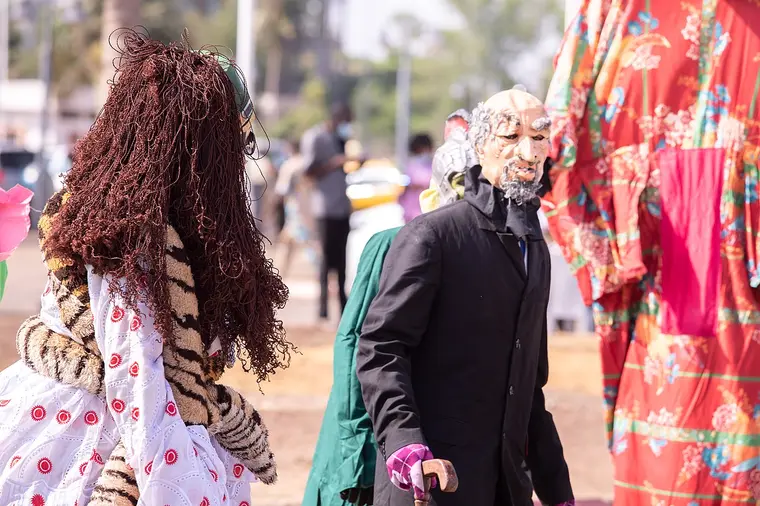
The Burrinha Carnival is the ultimate expression of that blending. During the festivities, the community takes to the streets with animal masks, the horse mask in particular, the burrinha, dressed in baroque costumes, dancing to a mix of African percussion and Brazilian samba. It is Africa and Brazil dancing together, as if the separation had never happened.
The Agudás embody the peak of Ouidah's spiritual hospitality. They are often baptized in the Catholic church, carry Portuguese first names, celebrate Saint John's Day, and tend with the same devotion to their ancestors' altars and to the Vodun deities of their lineage. This dual identity is not a contradiction. It is an answer to history.
The Agudás
The Table
Eating in Ouidah is reading its history.
Ouidah's cuisine tells the story of three centuries as an international trading post and its lagoon roots. You will not find it in guidebooks. It is eaten in homes, at markets, by the water.
Dakouin is the coastal culture's signature dish. A skillful blend of cassava flour, Gari, cooked directly in a very spicy fresh or smoked fish broth, served on an earthenware plate. Simple. Perfect. Irreplaceable. Djongoli: an ancestral recipe of bean cake in palm oil, firm and nourishing, eaten at big family gatherings.
Aguda influences enriched Ouidah's table with a Brazilian layer: Feijoada, local couscous, cooking techniques and spices Afro-Brazilian families brought back from the New World. In Ouidah, you eat with both shores of the Atlantic on your plate.
Medicinal Sodabi is an institution. This local palm spirit is not just a digestif. Every great family has its own Sodabi recipe, macerated with specific roots, barks and herbs. Offering a visitor a glass of it is an act of high regard, a way of wishing them health, long life, and purifying their energy. And at harvest or fishing season, the first portions are always offered to neighbors and passing strangers, before the family itself even eats. The economy of the gift comes before commerce.
The Table

Why Ouidah
What you will find nowhere else.
Other historic cities exist in West Africa. Other memorial sites. Other living spiritual practices. Ouidah is the only place where all three converge in the same location, in unbroken continuity, now joined by an economic transformation of world scale.
The Slave Route and the Door of No Return are where they are for a precise geographic and historical reason, this is not a reconstruction. Vodun has been practiced in Ouidah for centuries, not as a show staged for visitors, but as what it has always been: a way of living with the ancestors. The Agudás and their miniature Bahia exist nowhere else in Africa. The food, the Fa, the Zangbéto, the Sin dondon, all of it is alive, everyday, unstaged.
And His Majesty Daagbo Hounon Tomadjlèhoukpon II, Vodun Pontiff, and His Majesty Dada Daagbo Hounon Houna II, King of the Seas and Oceans, reside in Ouidah. Access to their presence, through a respectful and organized approach, is something only ONG Wa Afriki can offer. No ordinary tour operator has this access. None.
ONG Wa Afriki · N°0108/MISP
You do not visit Ouidah. You find it again.
Deliberately small teams. Access to places and people you will find nowhere else. The program starts with a conversation.
Request my experience →Frequently asked questions
What you're wondering before you come.
How do you get to Ouidah from Cotonou?
Ouidah sits 42 kilometers west of Cotonou. The Route des Pêches, now fully paved in its Phase 2, runs along the Atlantic from Fidjrossè to Ouidah and has turned the trip into a smooth coastal drive: 45 minutes flat. Taxi, zémidjan, or private vehicle. Within an After Vodundays program, the transfer from Cotonou's international airport is organized and included.
What is the best time to visit Ouidah?
Ouidah is accessible year-round, that is exactly what the Circuit 365 program guarantees. The high spiritual season centers on the Vodun Days Festival, held every January and institutionalized by the Beninese state as a major cultural event. Now spread over several days, it draws world artists, anthropologists and an Afro-descendant diaspora from four continents. Outside that window, the city returns to a more intimate rhythm, often more revealing.
Is Ouidah a safe destination for the African diaspora?
Ouidah is one of Benin's most welcoming cities. Benin ranks among West Africa's most solid democracies. For the African diaspora in particular, Ouidah is not a foreign destination: it is a homecoming. What Afro-descendant visitors consistently report is a total absence of animosity, a city that turned its tragic past into a universal lesson in resilience.
Can you visit Vodun's sacred sites without being initiated?
Some sites are open to everyone, the Python Temple, the Slave Route, the Sacred Forest of Kpassè. Other ritual spaces require an accompanied presence and a precise protocol. The secret convents, the Hounkpame of high dignitaries, only open within the framework of established relationships. That is exactly what ONG Wa Afriki organizes: real, respectful access, impossible to obtain alone. You do not enter as a tourist. You enter as someone who was expected.
How much time should you plan to see the essentials of Ouidah?
One day is enough to see the main sites. Three days let you begin to understand. A week starts to feel like something real. After Vodundays programs are built on that logic: no skimming, no checklist. Enough time for the city to speak to you, not enough for you to merely pass through it.
Is Ouidah a city under construction? Do the works disrupt a visit?
Ouidah is living through a historic transformation, but the construction sites do not cover the whole city. The Marina complex is being built on the Djègbadji coastline, at the far end of the Slave Route. The historic center, meanwhile, is being restored true to itself, meaning the colonial buildings are regaining their original shine. It is a city in the making, not a construction site. And that is precisely the window to come: before standardization, after authenticity.
8 places · Exclusive access · 365 days a year