The Experiences · Beninese Cuisine · Benin
A stranger's hunger
is a shame on the house.
In Ouidah, food is the first language of kindness. A 500-year culinary heritage, coastal, royal, Afro-Brazilian, sacred.
"The sacred welcome of the traveler. In local tradition, the stranger is seen as a blessing or a messenger of the divinities."
Hospitality of Ouidah · Miwaxon
The Beninese table
Six dishes.
Five centuries of memory.
Coast · Ouidah
Dakouin
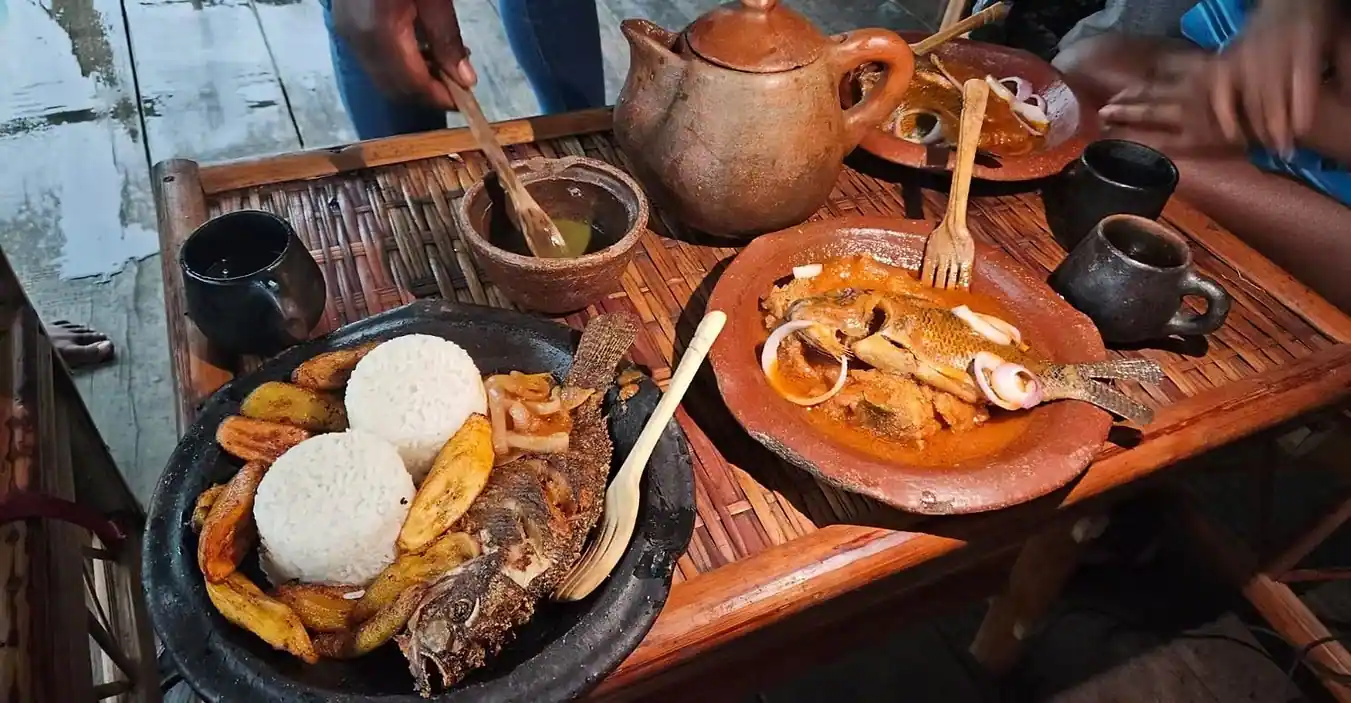
The signature dish of Ouidah's fishermen. Cassava flour (gari) cooked directly in a very spicy fresh or smoked fish broth. Traditionally served on an earthenware plate. This is not a recipe, it is a heritage.
Tradition · Benin
Djongoli
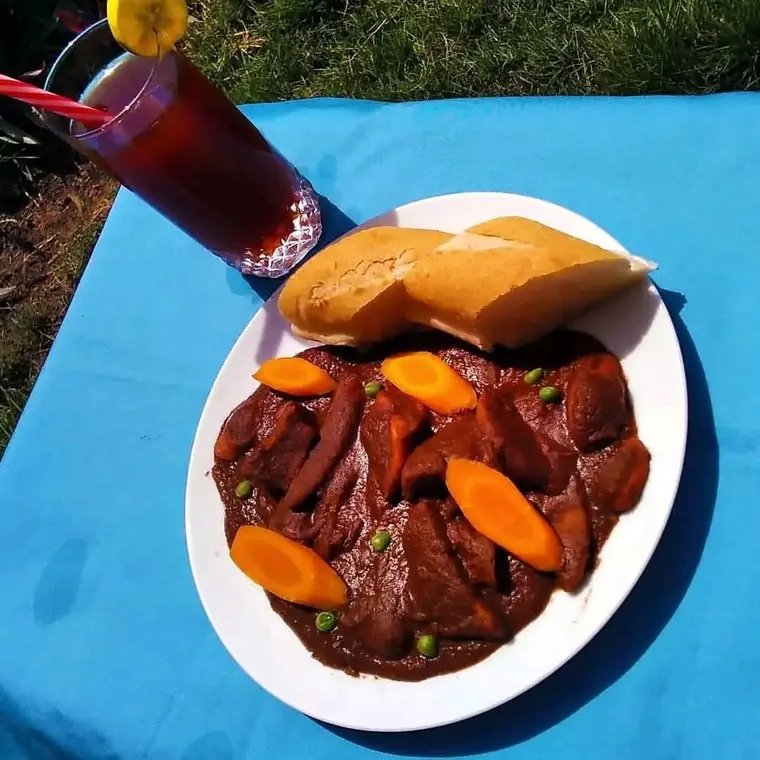
A bean cake in palm oil. Firm, nourishing, ancestral. Eaten at big family gatherings for generations. The cuisine that brings people together.
Brazil · Ouidah · 19th century
Aguda cuisine
Descendants of slaves who returned from Brazil brought their recipes. Influences from Feijoada, local couscous, Atlantic spices. A cuisine unique in the world, found only in Ouidah.
Tradition · All regions
Medicinal Sodabi
The local palm spirit, but in Ouidah, every great family has its own Sodabi recipe, macerated with roots, bark, herbs. Offering a visitor a glass is an act of high regard. A purification, not an aperitif.
Agricultural ritual · Benin
Sharing the first fruits
At harvest time, the first portions are offered to neighbors, dignitaries, strangers, before the family itself eats. The economy of the gift comes before commerce. After Vodundays seats you at that table.
Grand-Popo · Djègbadji
Lagoon cuisine
Lagoon fish, Atlantic shellfish, herbs from the banks. Grand-Popo's cuisine is a conversation with the water. Fresh, intense, unexpected.
The ritual of the welcome water.
Sin dondon.
Before any meal, before any exchange, water. In Ouidah, the ritual of the welcome water (Sin dondon) systematically opens the doors of a home. It breaks the distance instantly. The stranger stops being a stranger. They become a guest.
This simple ritual is one of the first things you will experience upon arriving in Ouidah. Before the program, before the ceremonies, before anything, the water welcomes you.
The table is already set for you.
You are expected.
You do not eat in an "African experience" restaurant. You eat with Ouidah families, with ingredients bought that morning at the market by the members of the family hosting you. Local producers, cooks and fishermen are paid directly, never through a middleman skimming value off the top. No agency can replicate this short, human supply chain.