Discover · Vodun · Ouidah, Benin
What the world
named without understanding.
Vodun is not a religion. It is not magic. It is the understanding that everything alive carries an energy, and that this energy deserves to be recognized.
"Vodun simply means life. And just as the person standing in front of you deserves respect, everything that lives deserves respect. That is why the first three words that come to me are: life, cohesion, brotherhood."
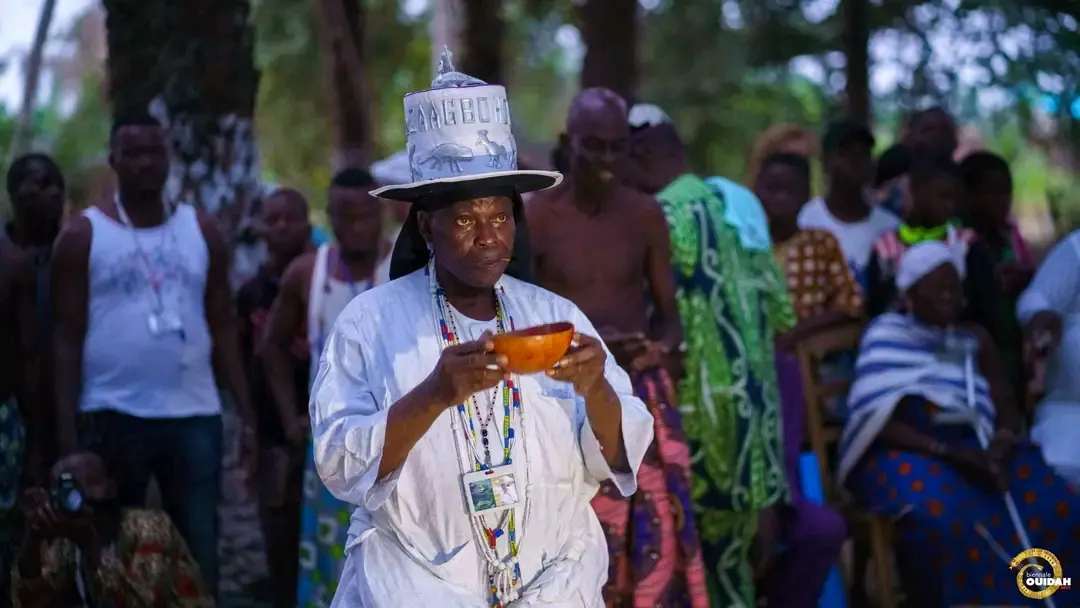
HOUNON AGBESSI AVLÉSSI · Guardian of the tradition
The Source
What the world named without understanding.
Vodun. Two syllables that three centuries of colonization tried to reduce to an image of fear. Dolls. Curses. Black magic. None of those words is right, not even close.
In the Fon language, Vo means peace, happiness. Dun means to draw from. Vodun: drawing from nature to find that peace. It is exactly that precise. It is exactly that simple. And it is exactly that immense.
Vodun is not a religion born from a book. It is not a belief you adopt or abandon. It is the understanding that everything alive, trees, rivers, lightning, the sea, the human body itself, carries an energy. And that this energy deserves to be recognized, nourished, respected. The four elements, water, earth, fire, air, are the source of everything. Every Vodun is the emanation of one of these elements. It is not the multiplicity of gods. It is one God, with rays, like the sun and the light that comes from it.
The Vodun
401 forces. One cosmos.
The Vodun pantheon numbers 401 deities, as many as water has forms, as many as nature has faces. Each Vodun corresponds to an element, a force, a domain of life. Together, they are not a collection of separate gods: they are aspects of a single reality, like the rays of one sun.
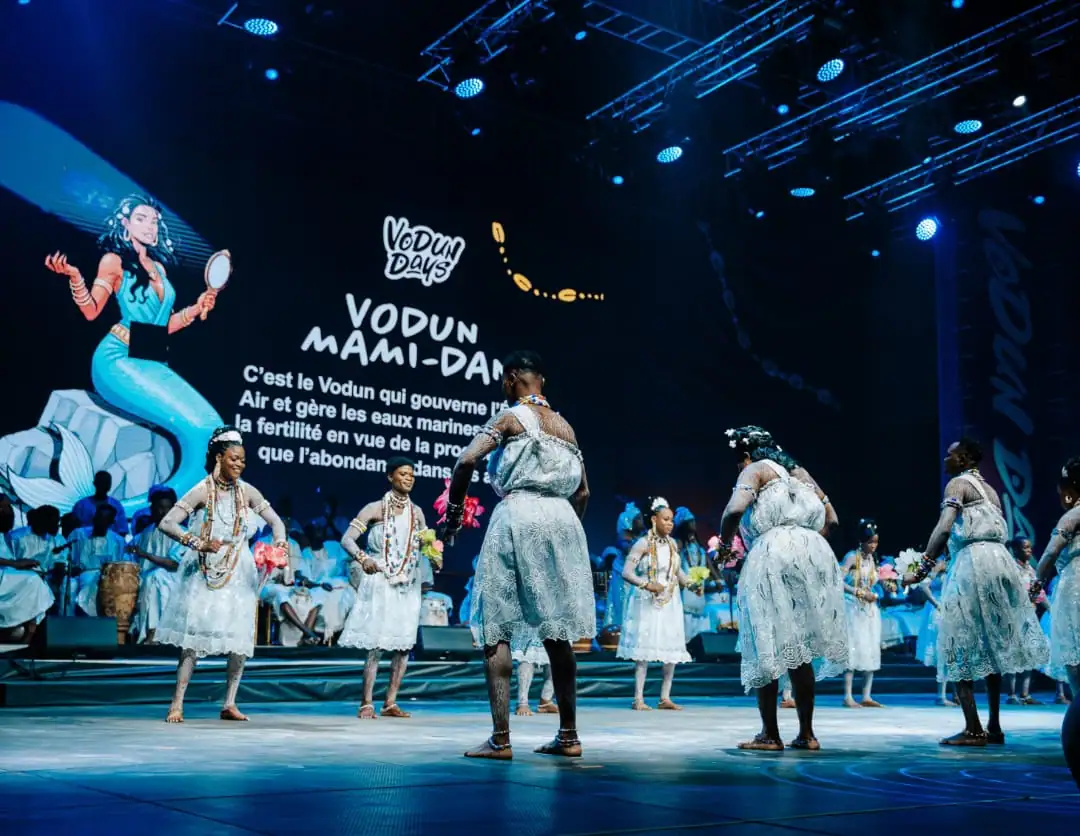
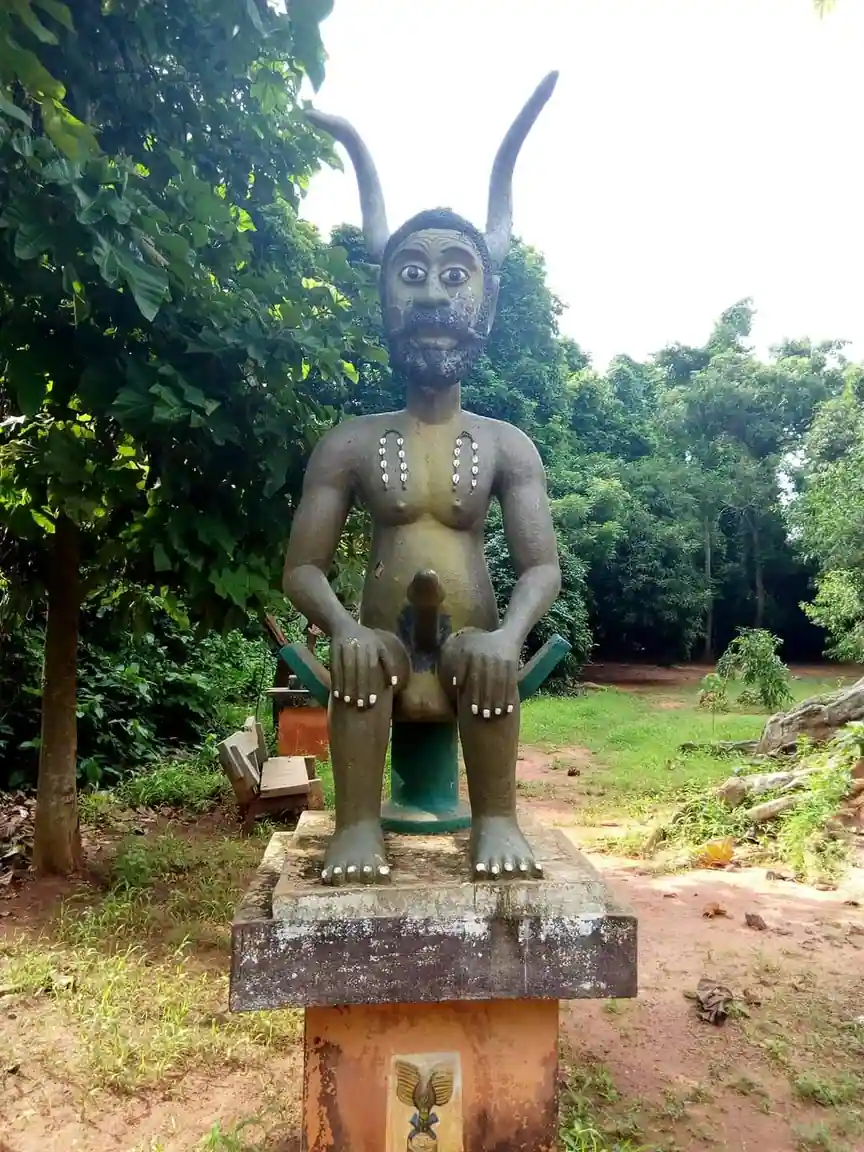
Legba is invoked first in every ceremony, guardian of crossroads, creative force, the heart of man. Xevioso governs lightning and justice. Sakpata is the master of the earth and of health. Mami Wata rules over the waters, prosperity, beauty. Dan governs the element of air and is the rainbow serpent, guardian of continuity. Nana Buruku is the oldest, mother of all the deities, tied to swamps and medicinal plants. Agbe watches over the depths of the ocean. Gou, the Vodun of iron, protects those who work metal and open paths.
Names change according to community and language. The same deity can be called Sakpata in Ouidah, Babalú Ayé in Cuba, Omolu in Brazil. What the transatlantic slave trade displaced was not only bodies, it was an entire civilization that survived in the memory of those it was thought to have broken.
Legba
The key that is already inside you.
Legba is not just the deity of crossroads. Legba is in every person. It is the creative force that governs human potential, the heart, the capacity to open or close one's paths.
To reach a person's head, you must first pass through their heart. That is what Legba represents: the entry point, the door. That is why, in every ceremony, he is invoked first, before any deity, before any prayer. Nothing opens without Legba. No path, no healing, no communication with the invisible world.
But Legba is not an outside power protecting you from without. He is already there, within you. To recognize him is to recognize your own creative force. That is why some initiates say that understanding Legba is understanding your own life.
The Ceremonies
What cannot be explained, only lived.
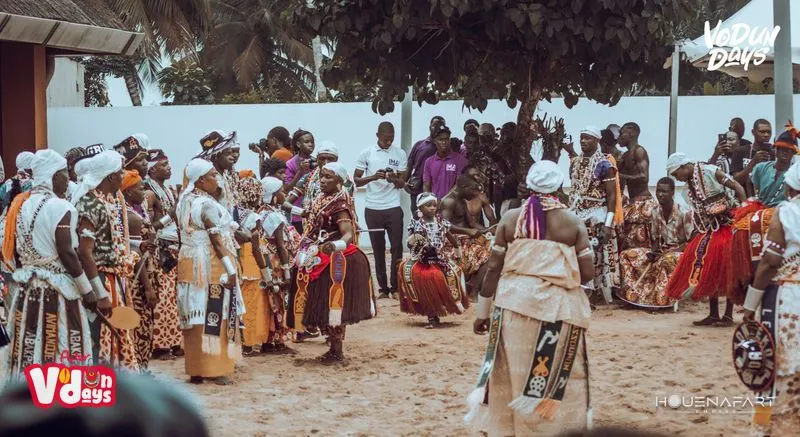
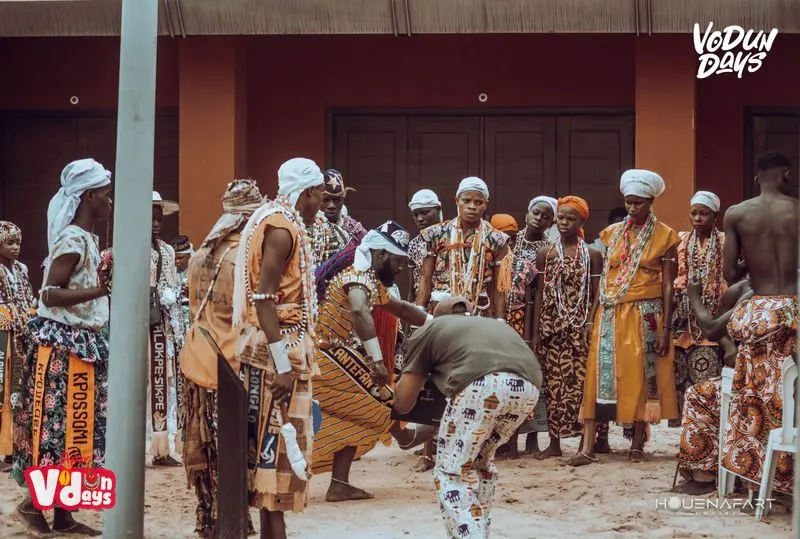
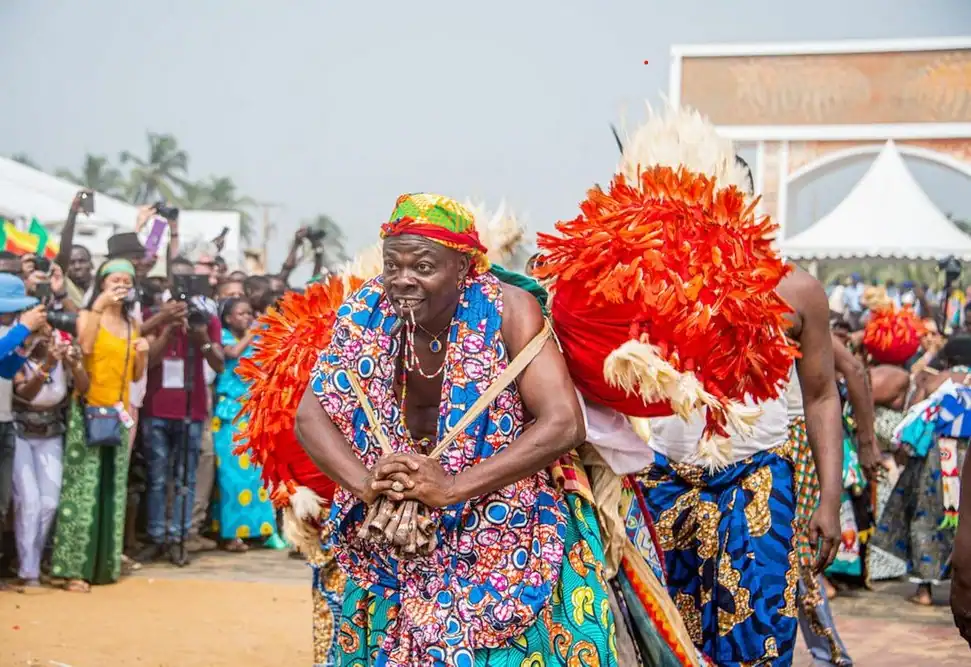
Trance remains one of the most misunderstood things in the Vodun world. It is not a performance. It is not madness. It is a connection, a possession by the deity choosing to manifest through a human body. It cannot be explained. It is received.
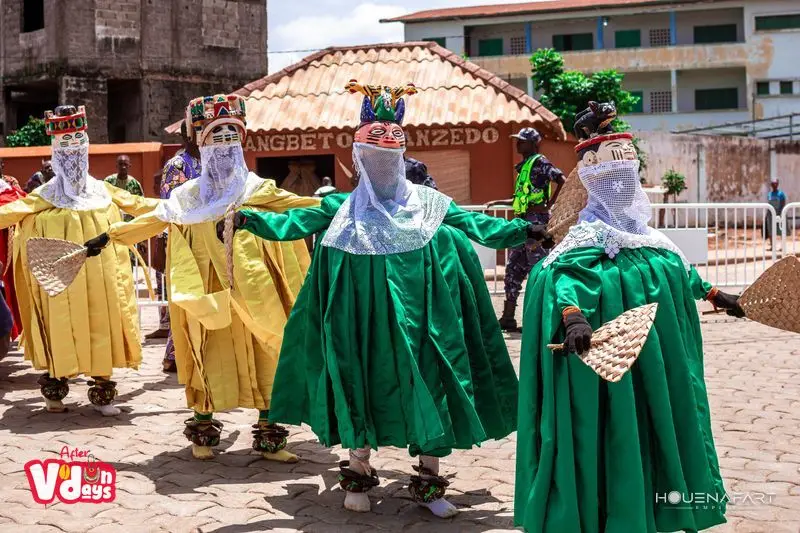
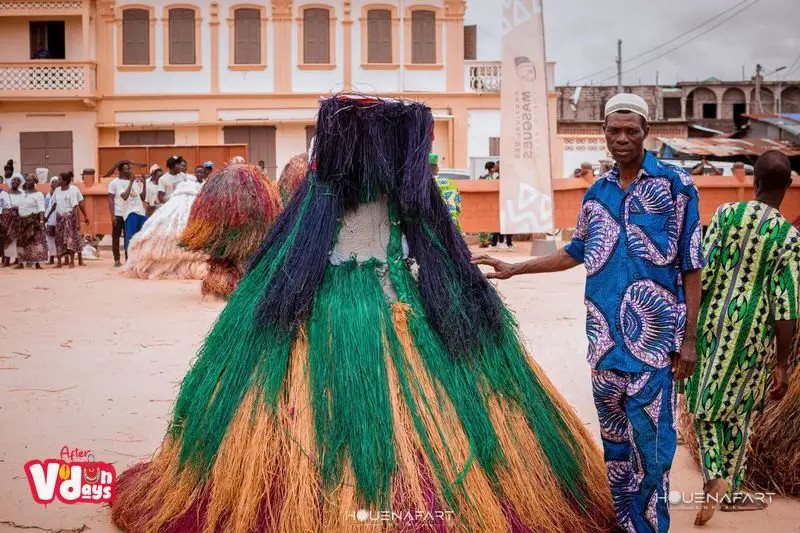
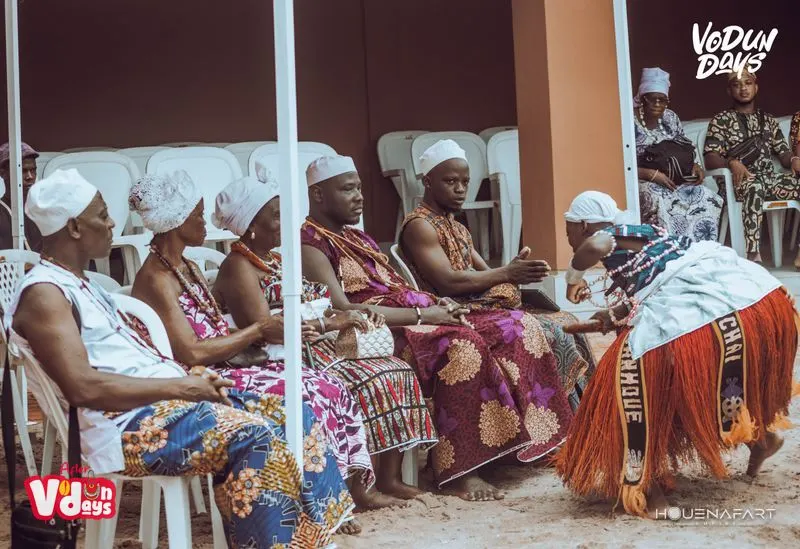
The Zangbeto goes out at night, guardian of order and neighborhood safety. The Egoun, the returned ancestor, speaks to the living in a language initiates know how to decode. Sakpata ceremonies heal or protect according to millennia-old protocols. Fa rituals, the oracle, read what destiny has traced and what can still be touched.
Music and sound sit at the heart of all this. Every deity has its rhythm, its drums, its frequency. Each deity corresponds to a precise degree of vibration, a measurable frequency. When the drummer finds it, the deity answers. That is not a metaphor. It is physical.
Vodun and the Diaspora
The same spirit, on four continents.
It is one of the greatest demonstrations of resistance in human history. Millions of people were torn from this coast, crossed the Atlantic in unimaginable conditions, and despite everything, the tradition survived. Vodun arrived in Haiti, Brazil, Cuba, Louisiana. Under other names, other languages, but the same structure. The same four elements. The same deities recognizable under other faces.
Haiti: Haitian Vodou descends directly from Fon Vodun in Benin. Papa Legba is Legba. Maman Brigitte is a form of Mawu. Haitian Lwa are Beninese Vodun, carried by millions of men and women who did not forget.
Brazil: Candomblé and Umbanda are the Brazilian forms. Exu is Legba. Omolu is Sakpata. Yemanjá is Mami Wata. Brazilian terreiros still practice, to this day, rituals whose roots run directly into the sacred forest of Kpassè.
Cuba: Santería and Palo Monte carry the same imprint. Elegguá is Legba. Babalú Ayé is Sakpata. Ceremonies are held in the same arrangement, with the same colors, the same rhythms.
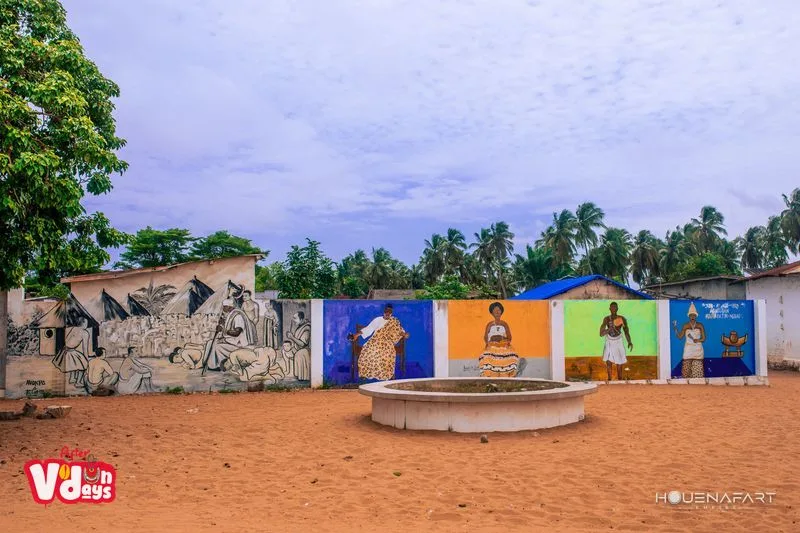
Ouidah is the source of all of this. Coming here means returning to the origin, for those of the diaspora, but also for anyone who wants to understand how a civilization resists erasure.
Ouidah · Guardian
Why here. Why now.
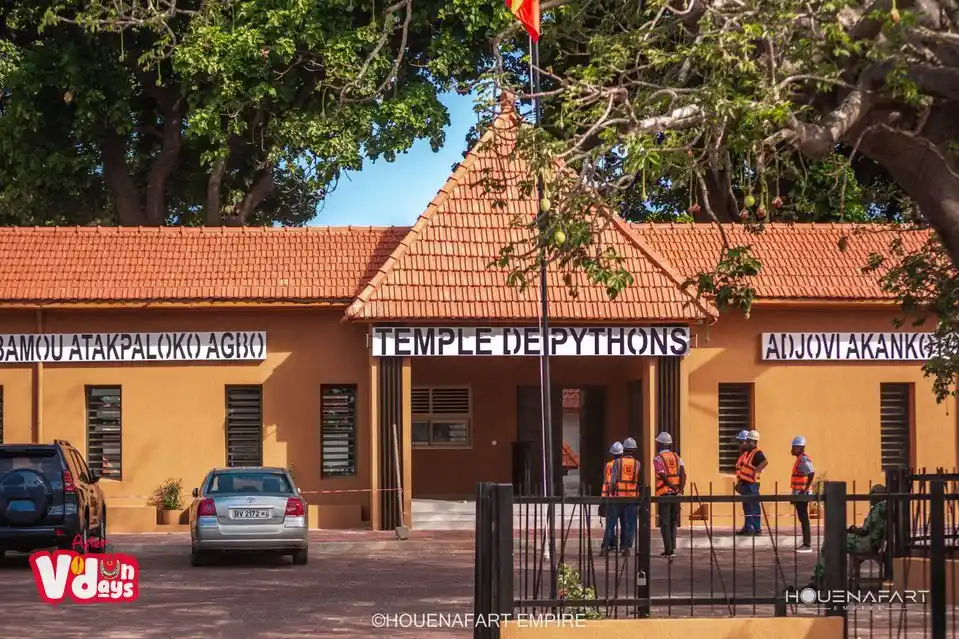
Ouidah did not become the world capital of Vodun by decree. It is a reality built over centuries of history. For generations, families from across the region settled here, each with its own deities, rites, guardians. No other city on the continent gathers as many spiritual receptacles. Ouidah's 252 great families each have their own Vodun. Together, they form the densest heritage of the African tradition.
And when the colonizers tried to erase all of it, ban the ceremonies, impose other gods, silence the drums, it was in Ouidah that resistance ran strongest. This is not a legend: these are documented facts. The guardians of the tradition resisted. And the rain came back.
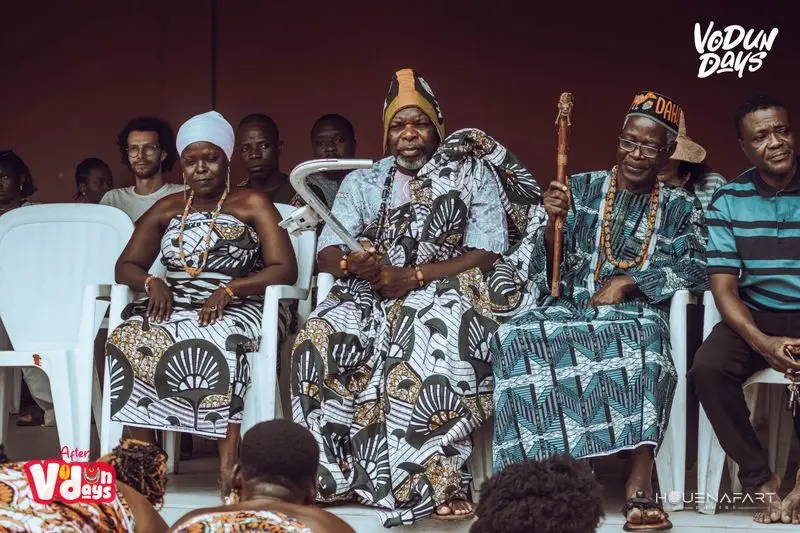
DAAGBO HOUNON HOUNA 1 was the Supreme Chief of the Vodun tradition, the guarantor of its continuity. What he preserved, what he teaches, what he embodies, is a direct transmission of a civilization that refused to die. After Vodundays is organized under his authority. This is not spiritual tourism. It is real access to what the world nearly lost.
The essence in three words
Life
Cohesion
Brotherhood
"Know thyself, simply. That is the very foundation of everything."
Frequently asked questions
Can you attend a Vodun ceremony without being initiated?
Some ceremonies are open to the public, Zangbeto outings, Egoun processions, certain festive rituals. Other spaces are reserved for initiates and only open through an established relationship of trust. ONG Wa Afriki, through its roots and DAAGBO HOUNON HOUNA 1's standing, organizes access impossible to obtain alone. You do not attend as a spectator. You enter as someone who was invited.
Is Vodun a religion?
The word itself answers the question: Vo + Dun, drawing from nature to find peace. Vodun predates the notion of religion. It is a philosophy of life stating that everything alive carries an energy, and that this energy deserves to be nourished and respected. It imposes no belief. It asks you to observe, to feel, and to know yourself.
Is the Vodun practiced in Benin the same as Haitian or Brazilian Vodou?
It is the same source. The same deities, the same rhythms, the same elements, water, earth, fire, air. Names change across languages and continents: Legba becomes Papa Legba in Haiti, Exu in Brazil. But the force is the same. What the transatlantic slave trade failed to erase is precisely that. Ouidah is the source. The rest of the world is where the river flowed.
Do you have to believe in Vodun for it to work?
No. That is one of the first truths the guardians of the tradition teach. Vodun is not a matter of belief, it is a reality of nature. Like drinking water when you're thirsty. You don't need to believe in water for it to hydrate you. What matters is the relationship you build with what is already inside you.
Can Vodun be learned from books or the internet?
Texts give a glimpse, a direction. But the real foundations, the teachings of the tradition's guarantors, are only passed on through initiation. It is a deliberate choice: certain knowledge is kept sealed, not out of pride, but because poorly transmitted, it loses its essence. The master appears when the student is ready. That, too, is Ouidah.
Is Ouidah really the world capital of Vodun?
There is no competition, there is a historical reality. Ouidah is the city where, for centuries, hundreds of families from across the West African coast converged, each with its own deities. No other city on the continent holds as many spiritual receptacles per square kilometer. And it was in Ouidah that, facing colonial attempts at erasure, the tradition's guardians resisted the hardest. The rest is geography.
Enter the tradition.
Don't just observe it.
After Vodundays programs give access to spaces and moments ordinary guides do not open. Under the authority of DAAGBO HOUNON HOUNA 1, Supreme Vodun Chief, guardian of Ouidah.
Coming to Ouidah
In Ouidah, ONG Wa Afriki (No. 0108/MISP) accompanies travellers who wish to approach this tradition with its guardians. Its After Vodundays programme welcomes them from January 4 to 14, 2027, 11 days and 10 nights, with an optional year-end stay at the Palais d'Agondji, December 30 to January 3, around the Vodun Days (January 2 to 9).
WhatsApp +229 01 61 70 36 66 · contact@aftervodundays.com
Write to ONG Wa Afriki →