Discover · The Patriarch Daagbo Hounon Houna I · Ouidah, Benin
The guardian
of the world's memory.
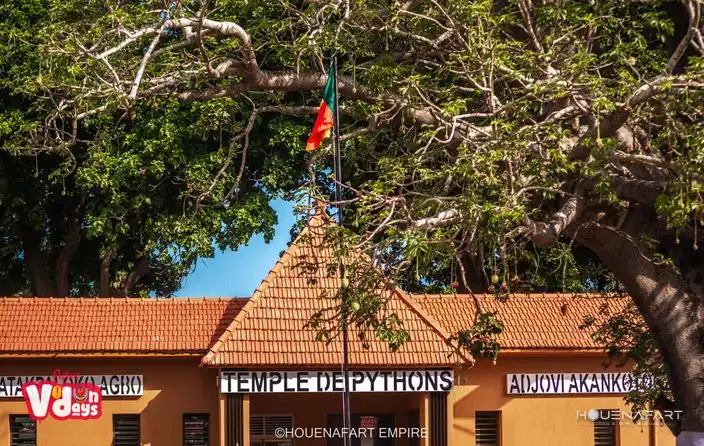
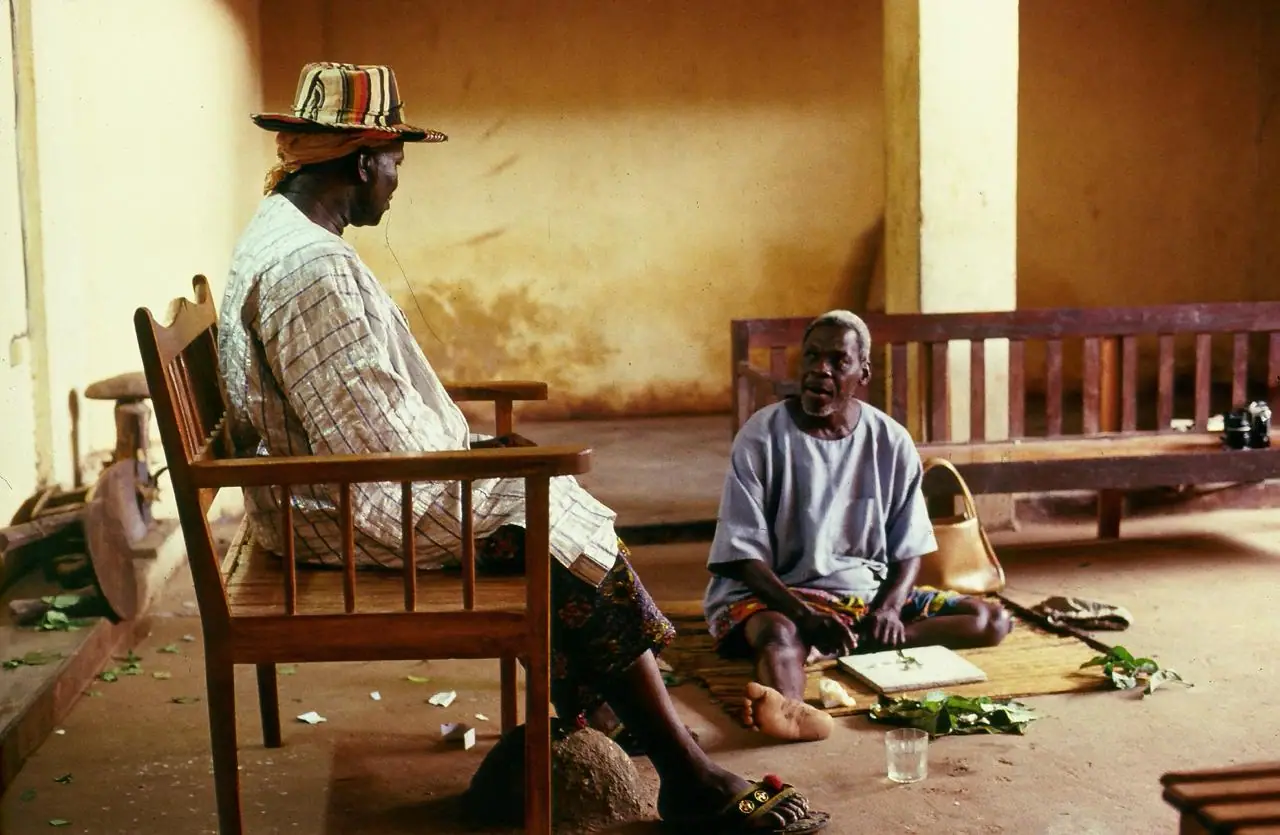
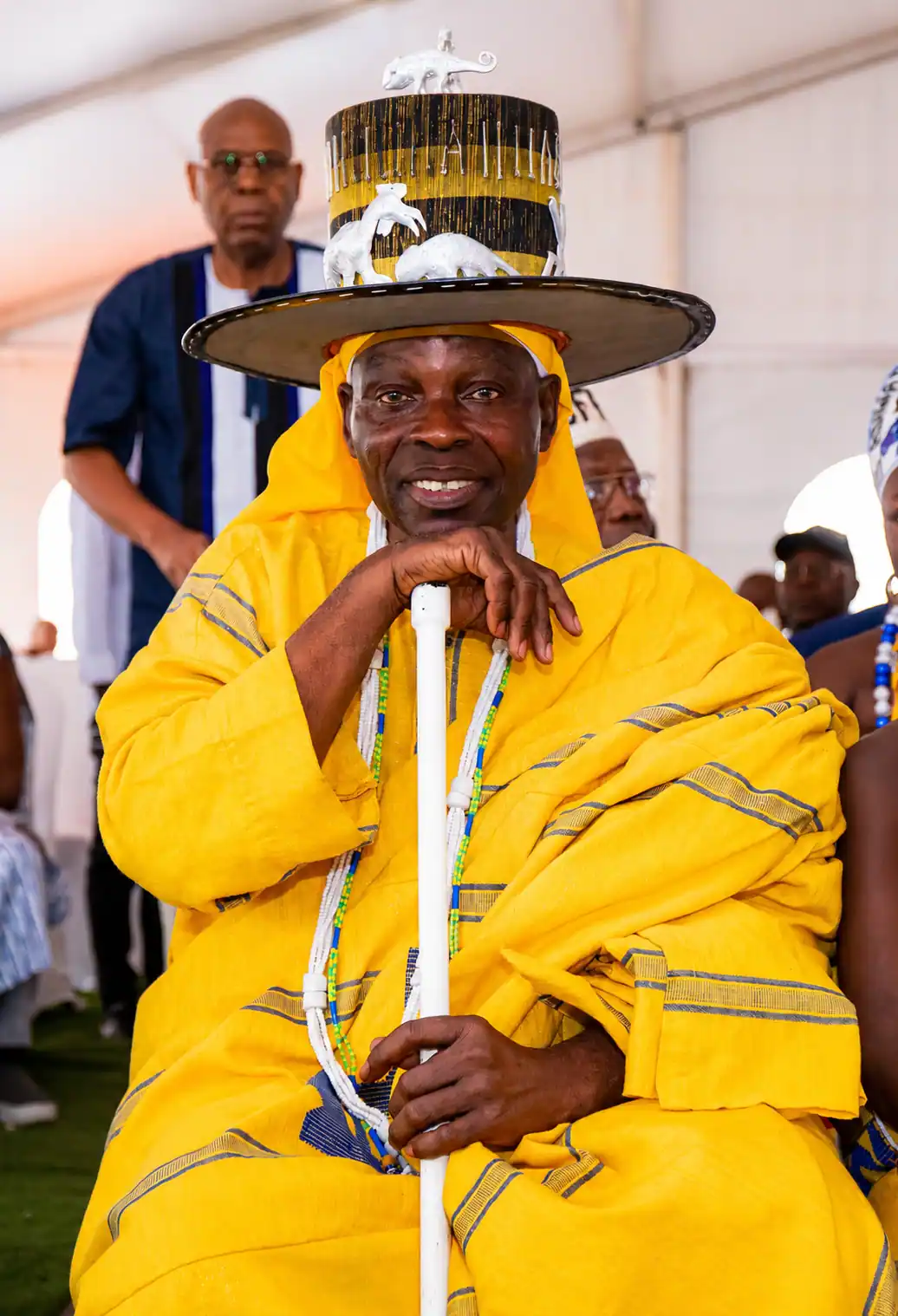
The Patriarch Daagbo Hounon Houna I, Supreme Chief of the Vodoun-non from 1975 to 2004. Guardian of the Sacred Forest. Guardian of the Python Temple. Guardian of the spirit that survived the Atlantic.
"We are the guardians of intangible memory. The Slave Route does not begin with suffering, it begins with the spirit that survived the Atlantic."
DAAGBO HOUNON HOUNA · UNESCO Declaration · Ouidah, 1994
The Office
His Holiness
Daagbo Hounon Houna I
Supreme Chief of the Vodoun-non · 1975 – 2004
The pivot root of transatlantic memory. The legendary sovereign who defied revolutions, spoke with the world's greatest leaders, and sealed Vodun's legitimacy on the international stage for good.
The first colonial mention of this lineage dates back to December 1, 1917, the Reynier Report, National Archives of Benin, reference ANB 1E14. The official designation: "Yovogan Hounnon Dagba." Colonial France recognized what it could not erase.
This is not a religious title in the Western sense. It is not a political dignity in the modern sense. It is a cosmic responsibility, that of maintaining the link between the living, the ancestors, the forces of nature, and the millions of descendants scattered across four continents.
Two titles often overlap without being interchangeable. Dada denotes a king, a sovereign at the head of a kingdom. Daagbo denotes the chief of a spiritual cult, a representative of the ancestors, a charge that can also, depending on the family, blend with that of family head. From one lineage to another, the two functions do not always overlap the same way.
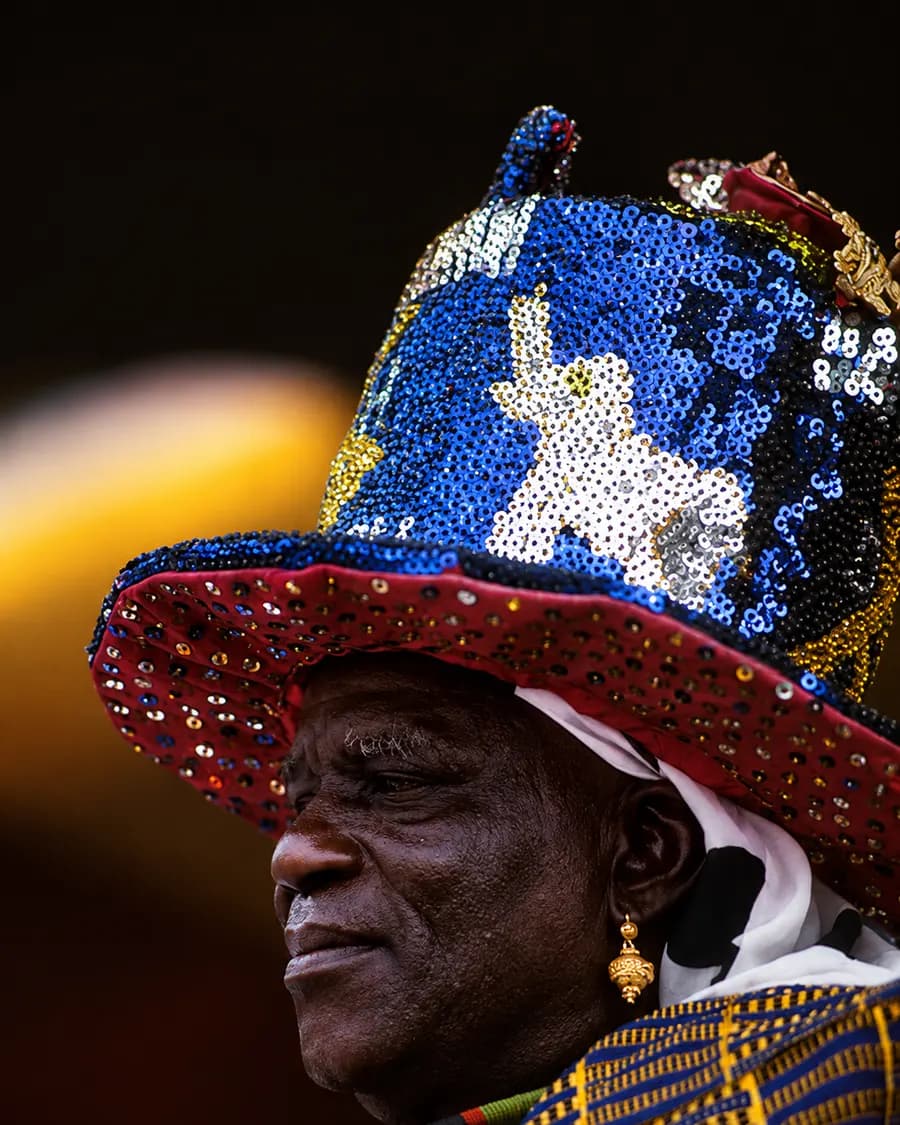
The Origin of the Name
Hounan.
The name that carries a reign.
Understanding the weight of this lineage means decoding the vibrational science of this sacred name, drawn from the original language. Hou denotes the ocean, and above all embodies the creative verb. Nan is short for Minon Nan, the Queen Mother, a matriarchal power, mother of the deities. In its literal sense, Nan also means the divine gift.
Hounan is the reigning name of a being in his own right, a leader whose unwavering courage and sacrifice in the name of universal peace command respect, and charge his descendants with the sacred duty of immortalizing him.
A Piece of History
From an ordinary life
to royal dignity.
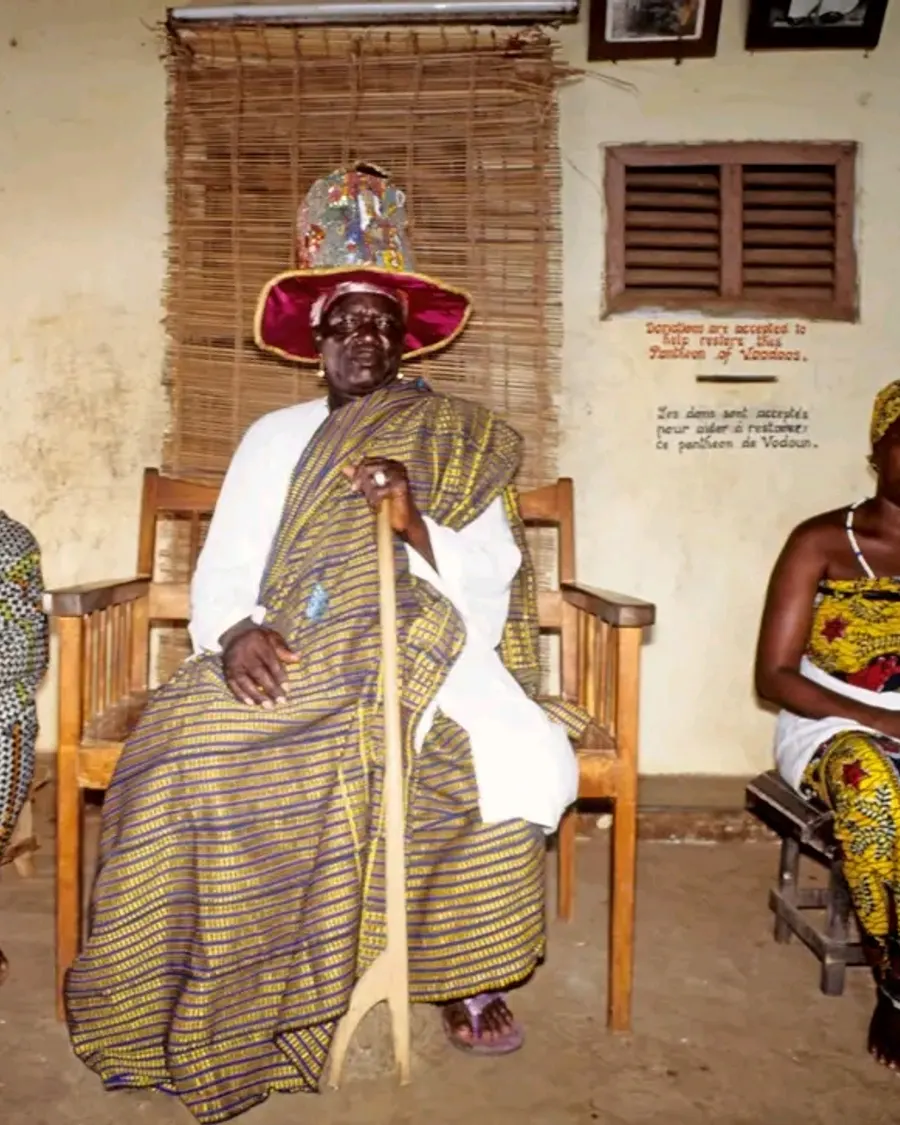
Born at the heart of Ouidah's imperial tradition, at the crossroads of the Houéda (Xwéda) and Houla (Xwla) lineages, the young prince first stood out through sheer vitality. An outstanding athlete, a goalkeeper the whole town noticed, he was also, all his life, an artist, composer and performer, at ease equally in esoteric circles and in popular rhythms.
Like every citizen, he learned a trade: masonry. Hired by the municipality, his rigor and his legendary good humor got him noticed on the biggest building sites.
The prelude to his spiritual rise began when he was named AKOGAN, supreme chief of the community, succeeding his father, Houndohome Djivo Agbessi Adetelou Gbinvlame Zingui-Gui. Despite his responsibilities in the administration and later in union work, he never compromised on his initiatory obligations.
On January 22, 1975, the day after the death of his predecessor Daagbo Hounon Tomadjlèhoukpon, he ascended the centuries-old throne under the name Daagbo Hounon Houna I, Supreme Chief of the Vodoun-non. His reign opened in a context of extreme hostility: the Marxist-Leninist revolution, determined to smother indigenous traditions. Facing that storm, his governance would prove historically bold.
The Feat
Four times.
Tradition allows three.
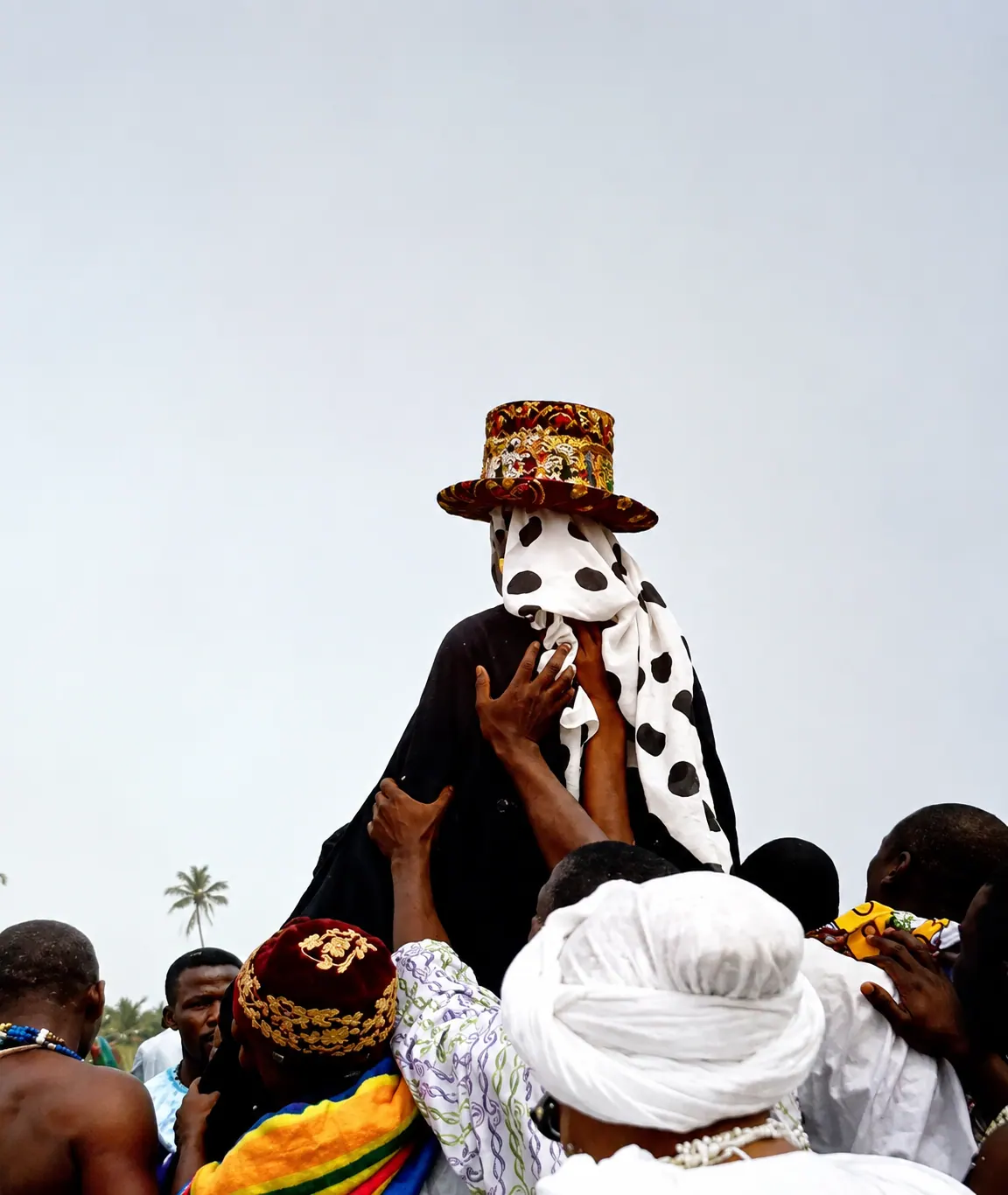
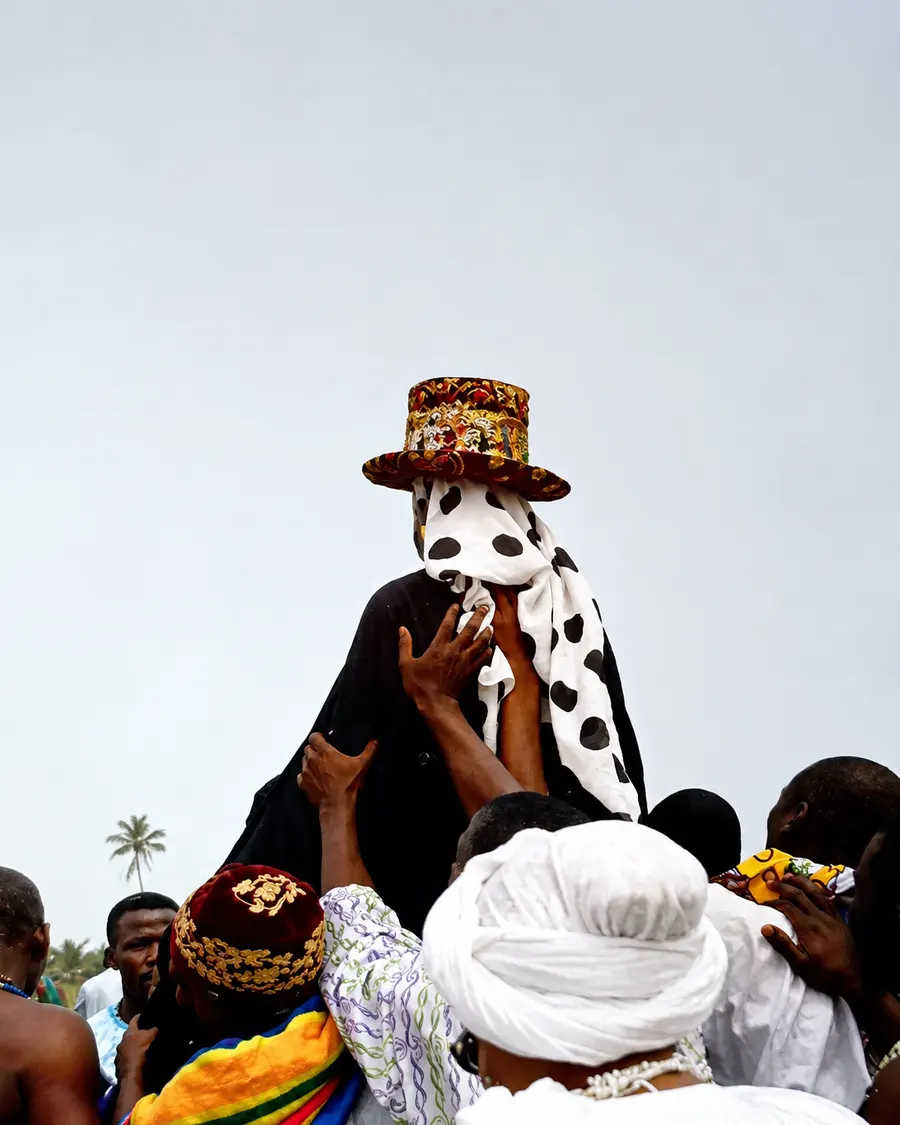
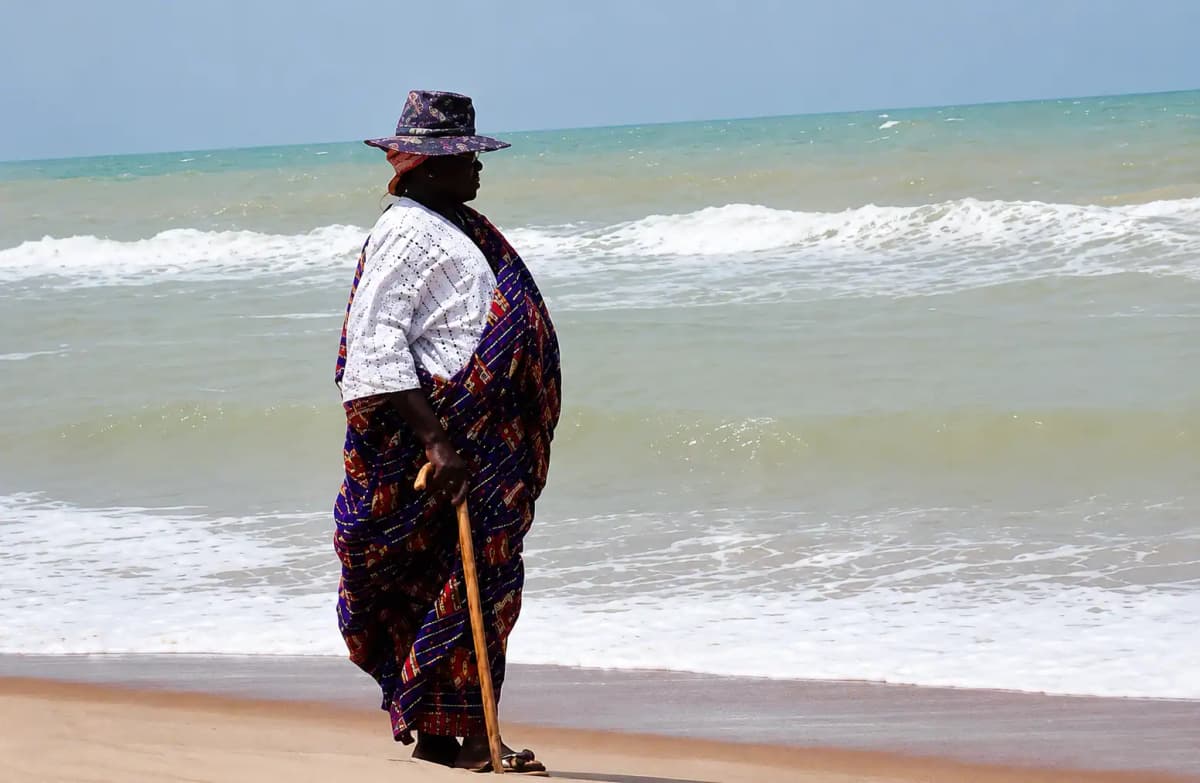
The "montée en Mer" (Ascent to the Sea) is the most powerful and rarest ceremonial of the Dagbo Hounon tradition. A rite of total communion with the forces of the ocean, the same forces that once carried, in the other direction, the millions of men and women shipped away from this coast. Tradition stipulates that a chief may perform it only three times over the course of his reign.
1975
Ascent
1979
Ascent
1983
Ascent
1988
Ascent
These four Ascents to the Sea were performed in a context of Marxist-Leninist revolution in Benin, a regime that actively fought traditional expressions. DAAGBO HOUNON HOUNA carried them out regardless. What that says about the man goes beyond any biography.
World Diplomacy
The whole world
came to him.
The Pope. The Dalai Lama. UNESCO. PBS. Diaspora leaders from four continents. Not because he was invited. Because Ouidah is the source, and one always returns to the source.
1988
Salvador de Bahia · Brazil
Inauguration of the Casa do Benin in Bahia alongside the King of Kétou, Adétutu. The first great formal reconnection between the Vodun of Ouidah and the Brazilian diaspora, the descendants of the Agudás, who returned from the Americas with the tradition intact.
1993
Cotonou · Vatican, John Paul II
A meeting with Pope John Paul II in Cotonou. Facing the head of the worldwide Catholic Church, DAAGBO HOUNON HOUNA defined Vodun in these terms: "Vodun is respect for nature and for God's creation." A definition that crossed every border.
1993
Ouidah · Ouidah 92 Festival
More than 500 delegates from the Americas, Asia, the Caribbean. Official recognition of Vodun as a religion in its own right in Benin. DAAGBO HOUNON HOUNA was consecrated World Chief by the communities gathered in Ouidah.
1994
Ouidah · UNESCO, Slave Route
Signing of the founding declaration of the Slave Route under the auspices of UNESCO. His founding sentence: "We are the guardians of intangible memory. The Route does not begin with suffering, it begins with the spirit that survived the Atlantic."
1999
Ouidah · PBS, Henry Louis Gates Jr.
A historic interview broadcast in the United States. Asked about the role of African kings in the slave trade: "It was not a choice, it was a shared tragedy. We sold bodies, but our ancestors kept the souls. Today, I am calling those souls back home."
N.D.
Meeting with His Holiness the Dalai Lama
The meeting between the Supreme Vodun Chief and the spiritual leader of Tibetan Buddhism, two millennia-old traditions, two guardians of the invisible, face to face. A dialogue between the world's two great non-Abrahamic spiritualities.
His Words
The words that remain.
"It was not a choice, it was a shared tragedy. We sold bodies, but our ancestors kept the souls. Today, I am calling those souls back home."
PBS · Henry Louis Gates Jr. · 1999
"Vodun is respect for nature and for God's creation."
Meeting with Pope John Paul II · Cotonou, 1993
"Blood is not death. Blood is the force of life. Without sacrifice, there is no exchange with the divine."
A&E, The Unexplained · 1998
"We are the guardians of intangible memory. The Slave Route does not begin here with suffering, but with the spirit that survived the Atlantic."
UNESCO Declaration · Ouidah, September 1994
In images
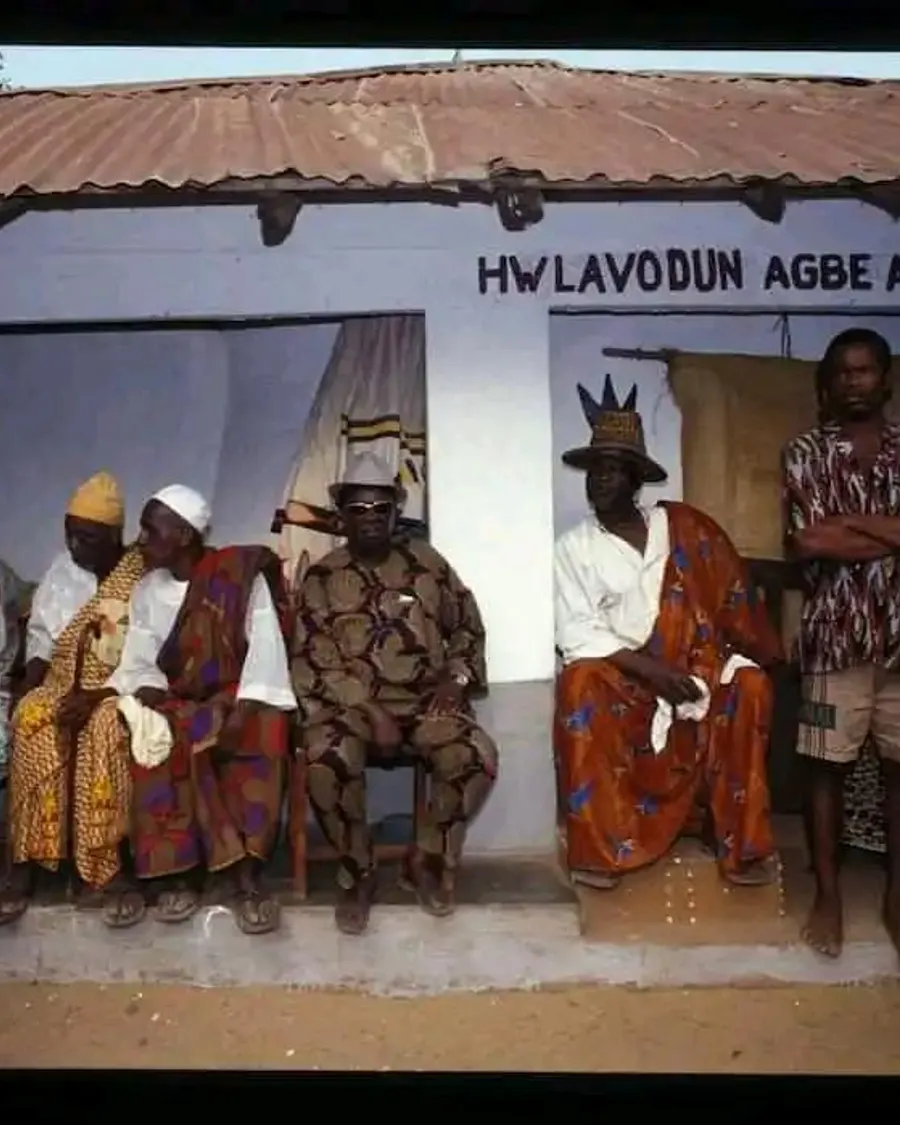
The tribute to Dada Daagbo Hounon Houna I.
The Legacy
What does not get lost.
He is no longer physically among us today, but he no longer needs to speak. His acts speak and will speak in his place for eternity. Every wave of the ocean at Ouidah, every step on the Slave Route, every altar honored across the Americas are the living echoes of his time on Earth. He carved his name into the marble of the invisible.
Great works are not inherited only through books, they are carried in the blood. It is to give shape to this vision and to immortalize this legacy that ONG Wa Afriki was created by his direct descendants. Its sacred mission is to keep alive, transmit and amplify this five-century heritage of sovereignty.
After Vodundays is the concrete expression of ONG Wa Afriki's action. If our programs give exclusive access to sacred sites, rituals and face-to-face meetings with the current Supreme Chiefs, it is because the doors open in the Patriarch's name. It is the network of legitimate trust, carried forward by those who hold the blood and the memory.
Frequently asked questions
Who is DAAGBO HOUNON?
DAAGBO HOUNON is the title of the Supreme Chief of Vodun, the highest spiritual authority of the African tradition. The office dates back to the 15th century in Ouidah. The title itself says it all: Hou means the ocean and Non the Mother, which makes Mother of the Sea, Guarantor of the sea. Dagbo means the priest-chief. The guardians of the ocean. The guardians of the coast. The guardians of what survived the Atlantic.
What is the 'montée en Mer' (Ascent to the Sea)?
The 'montée en Mer' is a ceremonial of exceptional power and rarity, tradition allows it to be performed only three times over a reign. DAAGBO HOUNON HOUNA performed it four times: 1975, 1979, 1983, 1988. A unique feat in the history of the lineage, achieved in a context of Marxist revolution hostile to any traditional expression.
What was the Ouidah 92 festival?
Ouidah 92 ran from February 8 to 18, 1993, the first great worldwide gathering of Vodun. More than 500 delegates came from Brazil, Haiti, the United States, Japan, the Caribbean. It was at this festival that Vodun was officially recognized as a religion in its own right in Benin, and that DAAGBO HOUNON HOUNA was consecrated Supreme World Chief by the diaspora communities gathered in Ouidah.
Can visitors meet the Supreme Chiefs through After Vodundays?
That is precisely what the After Vodundays programs organize, and what no ordinary travel agency can offer. ONG Wa Afriki, founded by Royal Prince Bertian, heir to this lineage, organizes audiences and moments of communion with the guardians of the tradition. This is not a visit. It is a reconnection.
What is DAAGBO HOUNON's relationship to the Slave Route?
In September 1994, DAAGBO HOUNON HOUNA signed the founding declaration of the 'Slave Route' under the auspices of UNESCO in Ouidah. His vision of what this route means shaped everything that followed: "The Slave Route does not begin with suffering. It begins with the spirit that survived the Atlantic." That sentence changed how the world sees Ouidah.
Meet the tradition.
In its place. With its guardians.
After Vodundays programs are organized under the direct authority of the Dagbo Hounon lineage. What you will experience here looks like nothing else. Because nothing else exists in the world.
The authorities of the tradition
Grand Patriarch
DAAGBO HOUNON HOUNA 1
Vodun Pontiff · Benin
Tomadjlèhoukpon II
King of the Seas · Diaspora
Dada Daagbo Hounon Houna II