Brazilian Diaspora · Ouidah, Benin · Candomblé · Agudás
Salvador de Bahia
has always looked at Ouidah.
Candomblé was born here. The Agudás came back here. Brazilian architecture is here, in the streets of Ouidah. Brazil and Benin were never truly apart.
The Black Atlantic
Four connections
you might not have known.
Candomblé comes from here
Brazilian Candomblé, especially Candomblé Jeje, descends directly from Beninese Vodun. Candomblé's orixás are the same entities as Ouidah's Vodun. Xangô is Shango. Iemanjá is Mami Wata. Omolu is Sakpata. Same memory, different languages.
The Agudás, a 19th-century return
Descendants of freed slaves returned from Brazil to Benin in the 19th century, the Souza, Almeida, da Silva, Martinez families. They rebuilt their houses in Ouidah, bringing Sobrado architecture, carnival, Afro-Brazilian cuisine. In Ouidah, Africa and Brazil have already been intertwined for 200 years.
Salvador de Bahia and Ouidah
Salvador de Bahia is to Africa what Ouidah is to Brazil, the two cities look at each other across the Atlantic. Researchers speak of a "Black Atlantic" linking these two shores. After Vodundays is the journey that closes that loop.
Portuguese family names in Ouidah
In Ouidah you will see family names you know. Ferreira. Da Silva. De Souza. These are the Agudás, your cousins who came back. Their presence in this city is living proof that Brazil and Benin were never truly apart.
The names you already sing
Mahi. Savalu. Mina.
These are places. They still exist.
The nations of Candomblé Jeje and Tambor de Mina did not keep abstract names. They kept the names of peoples and towns still on the map, a few hours from Ouidah.
Jeje Mahi
The Mahi live in central Benin
The Jeje Mahi nation carries the name of a people who exist today, a few hours from Ouidah, in the Savalou and Dassa region. It is not a name lost in the crossing. It is an address.
Jeje Savalu
Savalou is a town in Benin
Savalou lies about 200 kilometres north of Ouidah. The town has its own king, its cults, its markets. Singing for the Jeje Savalu means singing the name of a place you can visit.
Casa das Minas
São Luís, Maranhão
The Casa das Minas tradition traces its founding to women who came from Dahomey, the kingdom whose capital was Abomey and whose port was Ouidah. It is one of the oldest houses of its kind in the country, and its memory points straight back to this coast.
Tambor de Mina
The name comes from the Mina Coast
The Mina Coast named precisely this stretch of shore, what is today Benin, Togo and eastern Ghana. The name still sung in Maranhão is the one ships once gave to this place.
Ouidah is spelled Uidá in Portuguese. Dahomey was the kingdom whose capital was Abomey and whose port was Ouidah. Both names crossed the Atlantic inside the songs, and came back here whole. The town is still in the same place.
Ouidah's Agudás
They came back from Brazil.
They are still here.
In the 19th century, freed Brazilians crossed the Atlantic in reverse, from Salvador de Bahia to Ouidah. They brought with them Portuguese colonial architecture, Brazilian cuisine, dance, carnival. Their descendants still live in the same houses in Ouidah today.
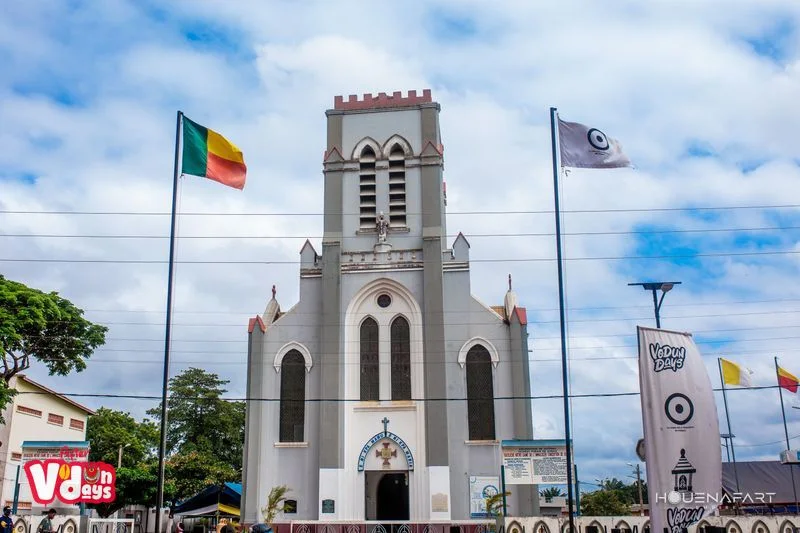
At After Vodundays, you will walk through Ouidah's Brazilian quarter, streets that resemble Salvador de Bahia. That is no coincidence. It is the same memory.
Questions from the Brazilian diaspora
Does the Jeje Mahi nation connect to a real place in Africa?
Yes. The Mahi are a people living today in central Benin, in the Savalou and Dassa-Zoumé region, a few hours from Ouidah. The nation's name is not a liturgical abstraction: it names a population that exists, with its own language, cults and territory.
What about Jeje Savalu?
Savalou is a town in Benin, about 200 kilometres north of Ouidah. It has its own king, its cults and its annual festival. To invoke the Jeje Savalu is to invoke the name of a place that is still on the map and can be visited.
Is Uidá the same as Ouidah?
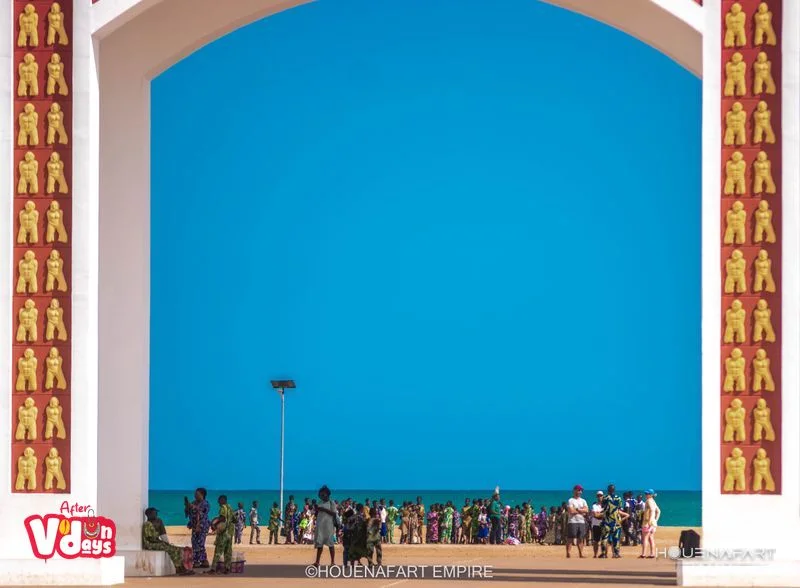
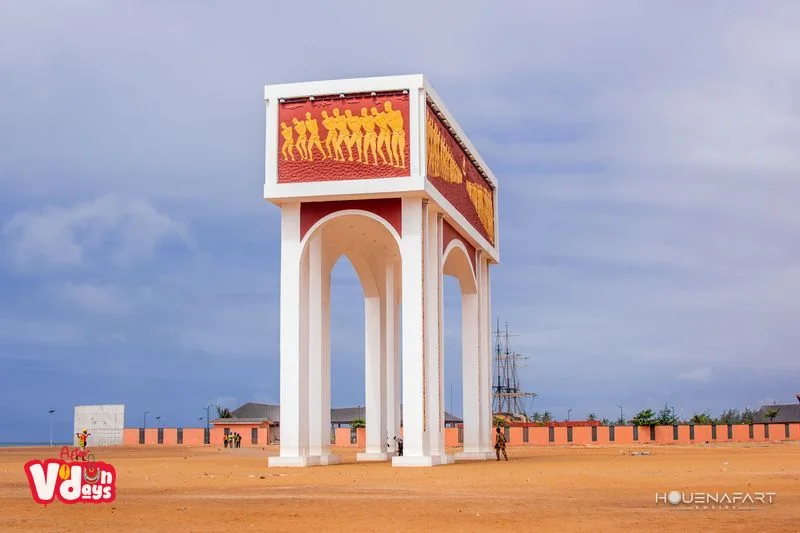
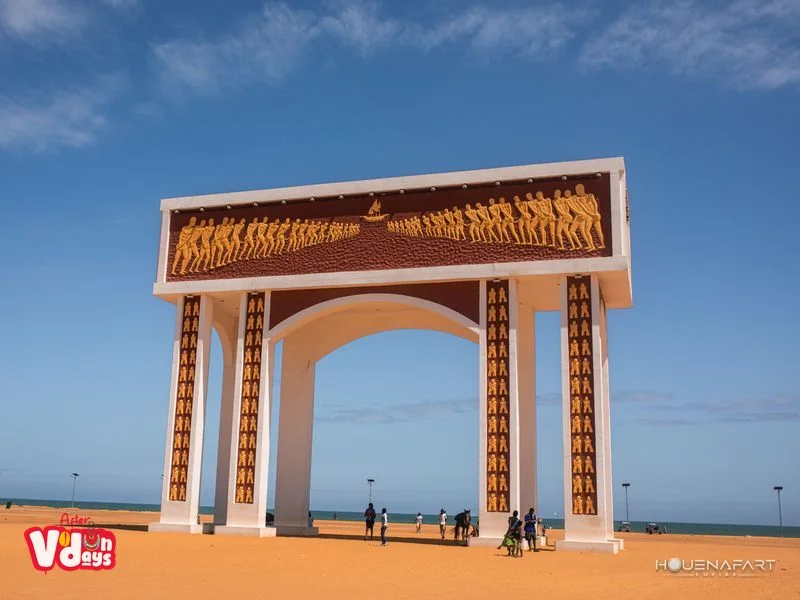
Yes. Uidá is the Portuguese spelling of the town the French write as Ouidah and the English once spelled Whydah. It is where the Portuguese built the Fort of São João Baptista de Ajudá, and where the Door of No Return still stands.
What exactly was Dahomey?
Dahomey was an African kingdom whose capital was Abomey and whose main port was Ouidah. It existed from the 17th century until French colonisation at the end of the 19th. It does not match today's borders of Benin: it was a state, not a country in the modern sense.
Does Casa das Minas connect to Benin?
The Casa das Minas tradition, in São Luís, Maranhão, traces its founding to women who came from Dahomey. It is an orally transmitted memory, and researchers debate its details, but the direction it points to is clear: this coast, this kingdom, this port.
I practice Candomblé in Salvador, will After Vodundays speak to me?
Deeply. Participants who practice Candomblé often describe After Vodundays as a return to their spiritual home. The rituals, the deities, the rhythms, you will recognize what you practice in its original form.
My family name is Da Silva or De Souza, are we Agudás?
Maybe. These family names are typical of Ouidah's Agudás, descendants of freed people who returned from Brazil. In Ouidah, you will meet families who have carried these same names for generations. It is often a very powerful moment of recognition.
Is After Vodundays for Brazilians who don't practice?
Yes. Whether you practice Candomblé, are simply curious about your origins, or took a DNA test pointing to West Africa, After Vodundays welcomes every kind of diaspora background.
Are meetings with Aguda families planned?
Yes. Ouidah's Aguda families are part of the city's social fabric. Meetings are arranged for Brazilian participants who wish to explore this particular connection.
The Atlantic separated you.
After Vodundays brings you back together.
Bahia's Candomblé and Ouidah's Vodun share the same source. After Vodundays reconnects you to that source in its most intact state, not reconstructed, not turned into a museum piece. Access is exclusive: ONG Wa Afriki is the only organization to have built a network of trust with Ouidah's tradition-guardians. Families and guardians paid directly, no middlemen. No Brazilian operator can replicate this.