After Vodundays · Transparency · ONG Wa Afriki
Person by person.
Here is who receives your commitment.
Roots tourism has a reputation to rebuild on this exact question: who actually touches the money the diaspora commits? This page answers with named beneficiaries, not promises.
2
host families paid directly
4
tradition-guardians paid at their own rates
0
agency commission
100
places per edition, never more
The rule in 60 words
Every service a participant pays for goes directly to a local stakeholder in Ouidah, with no middleman, no agency commission. This is not a marketing estimate: it's how every provider in the program actually gets paid, published every year in the NGO's report.
Who touches the money
Four categories.
No middlemen.
2 host families
Paid directly, with no middleman, for homestay lodging. The rate is theirs, never negotiated down by an outside agency.
4 tradition-guardians
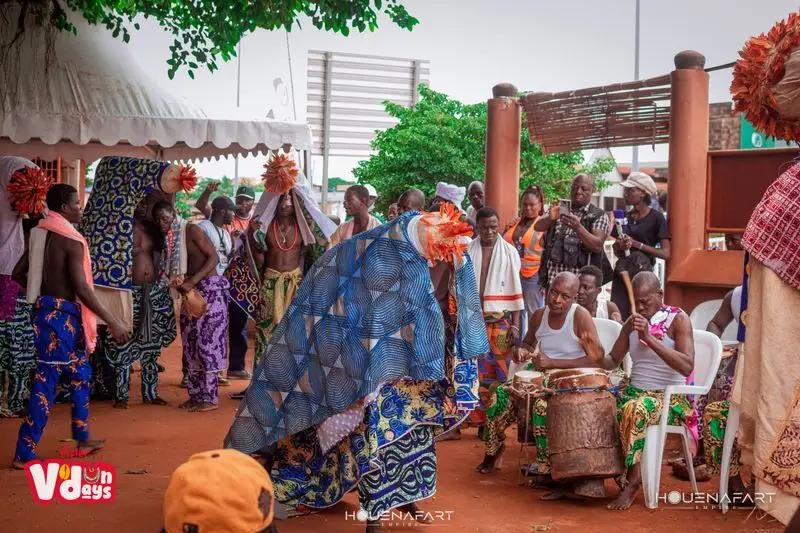
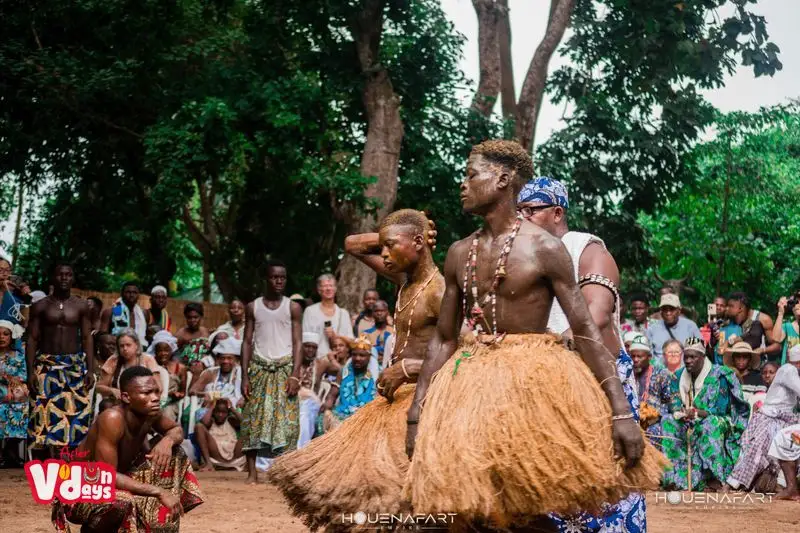
Bokonons, Hounon, Mami Wata priestesses, paid at their own rates for every ceremony, every consultation, every transmission opened to participants.
Local guides and drivers
Recruited in Ouidah, trained in local history and community protocols, not contractors imported from Cotonou or elsewhere.
Grand-Popo's artisanal salt producers
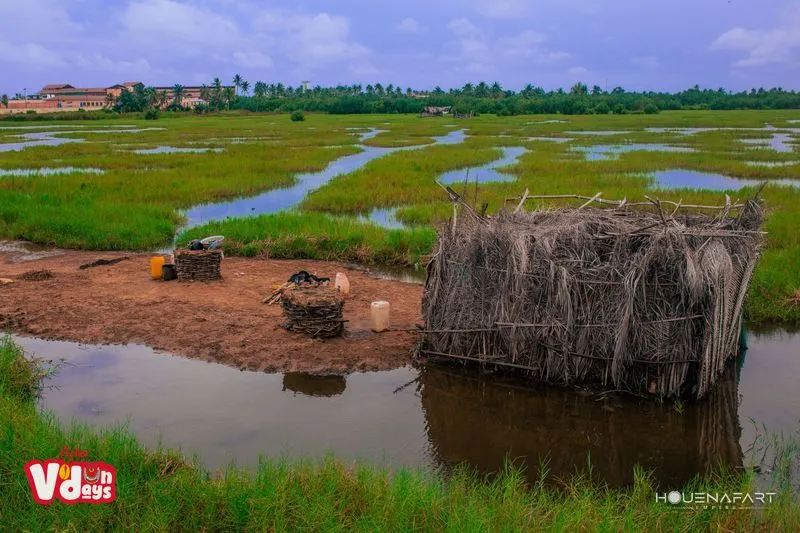
The igneous salt of Grand-Popo, exported by ONG Wa Afriki, directly pays the women who produce it using ancestral methods.
Why it matters
Roots tourism carries a known wound.
We chose to answer it with names.
The debate over who really benefits from roots tourism runs across all of West Africa, local communities watching buses pass without seeing the revenue, land and prices soaring while those on the ground remain spectators. After Vodundays was built the opposite way from the start: teams of 10, never more, 5 in VIP, so that every franc returned goes to an identified person, not a diluted budget line.
ONG Wa Afriki · N°0108/MISP · Ouidah, Benin
Your access directly funds
those who host you.
This is not one more marketing line. It's the structural reason what you commit stays in Ouidah, with those who host you, and nowhere else.