Diaspora · DNA roots · Ouidah, Benin
Your DNA test says Benin & Togo.
Here is what it really holds.
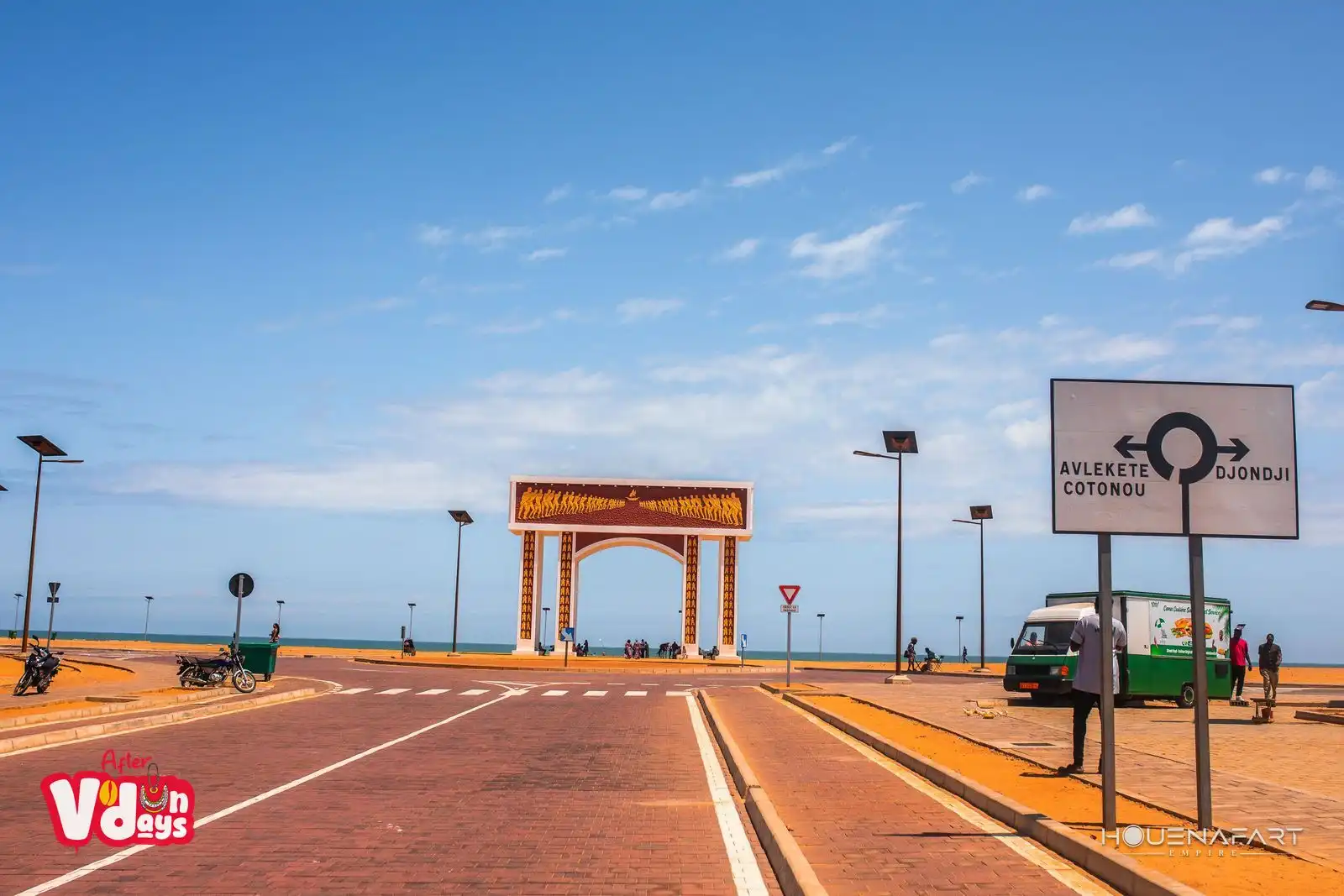
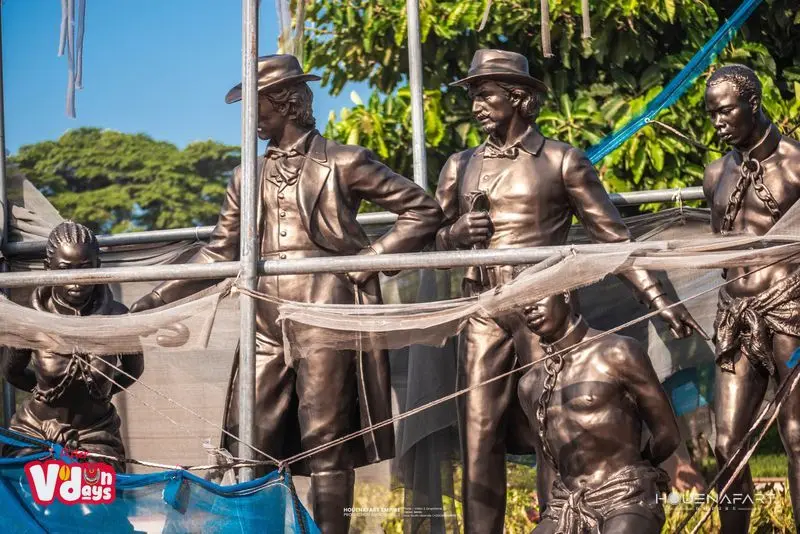
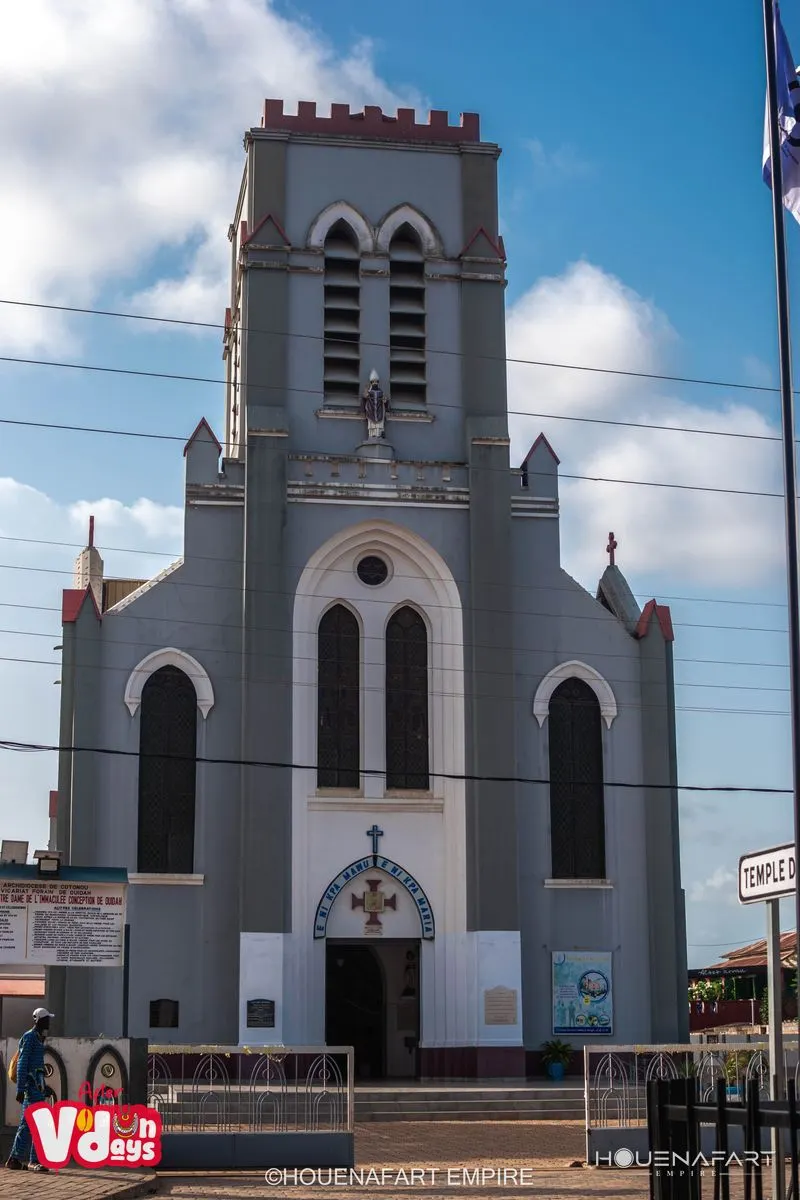
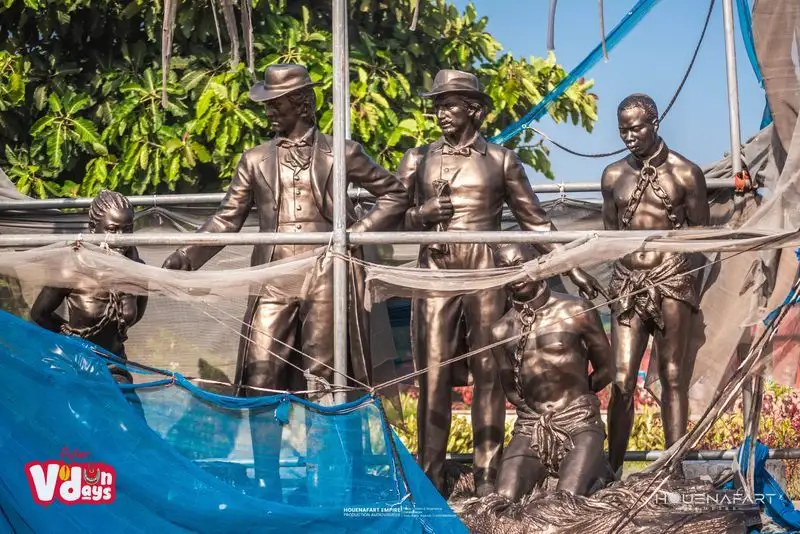
Benin & Togo is a region, not a country. It covers the Fon, Adja, Ewe, Gun, Mina, Hueda and Mahi peoples and part of the Yoruba world, on both sides of borders drawn in 1885. At its centre sits Ouidah, the port through which more than one million captives were shipped, second only to Luanda in all of Africa. Your percentage can point you to this coast. It cannot name your family: that part is found here, not in a lab.
Verified on September 26, 2026
Historical figures come from the Slave Voyages database and from the historian Robin Law, listed below. We never publish a number we cannot source.
By Bertian Hounon, founder of the NGO Wa Afriki
12.5 million
Africans embarked on slave ships between 1501 and 1866, of whom 10.7 million reached the Americas alive
About 2 million
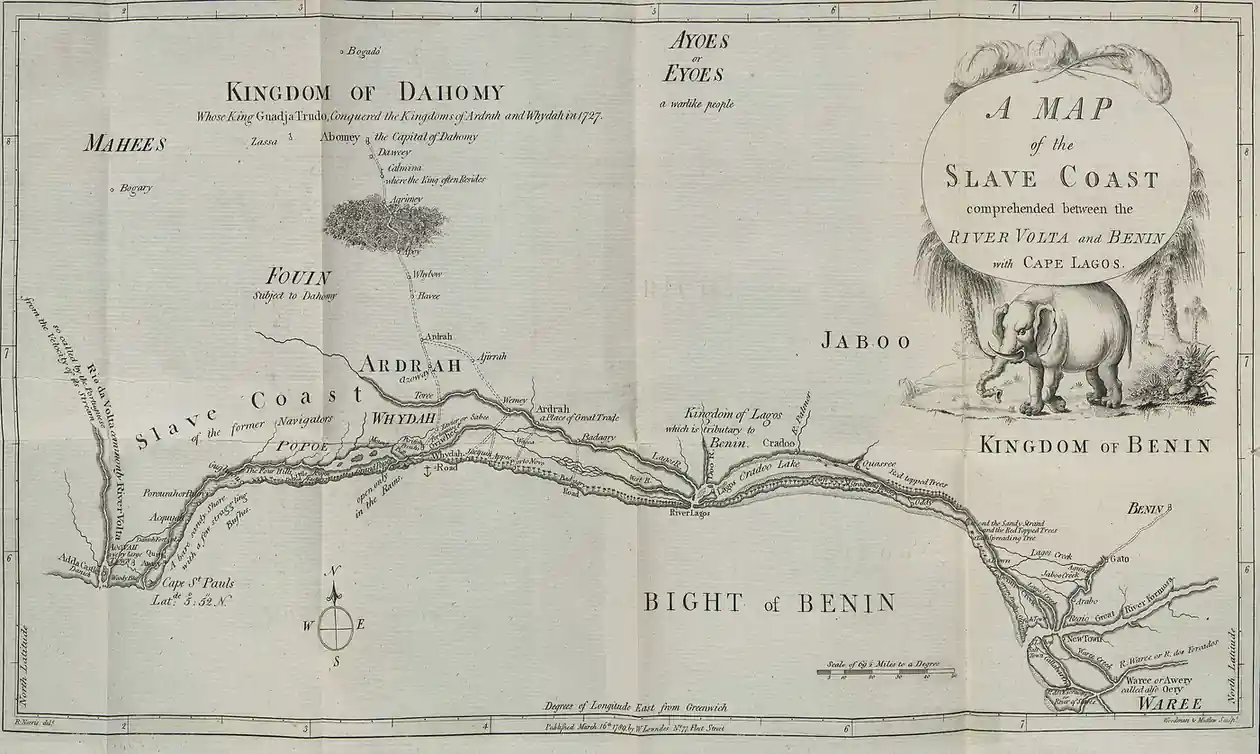
Embarked from the Bight of Benin, the coast your Benin & Togo label points to, about 16% of the total
Over 1 million
Passed through Ouidah alone, the second largest embarkation port in Africa after Luanda
- Sources : Slave Voyages, Trans-Atlantic Slave Trade Database, Rice University
- Sources : Robin Law, Ouidah: The Social History of a West African Slaving Port, 1727-1892, Ohio University Press, 2004
The label on your report
Four things to know
before you decide what to do with it.
It names a region, not a country
Testing companies group West African populations into broad zones. The Benin & Togo zone holds peoples whose lands cross today's borders. Your result does not say you descend from a modern state. It says your ancestors came from that cultural space.
Ouidah is its centre
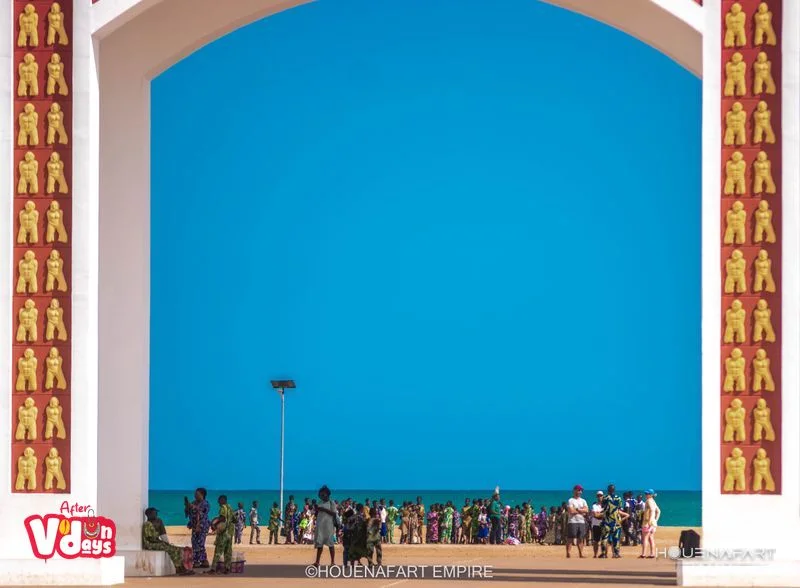
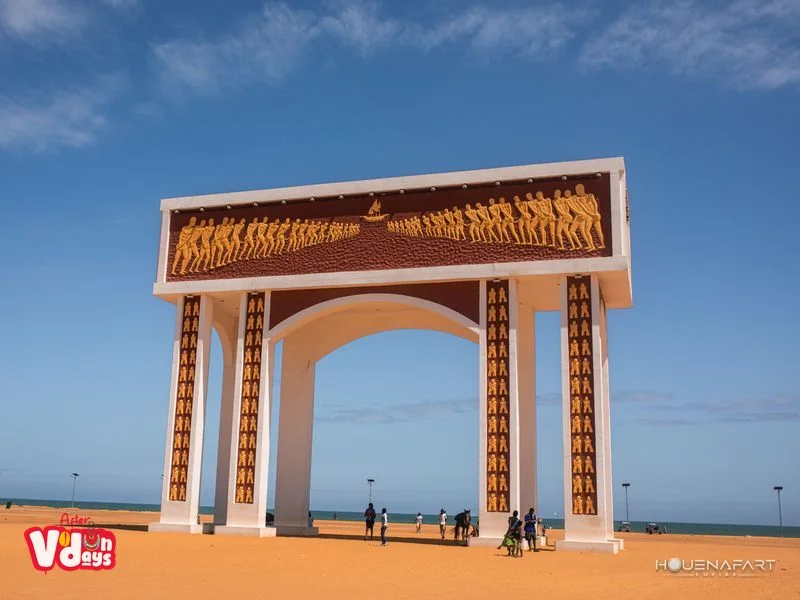
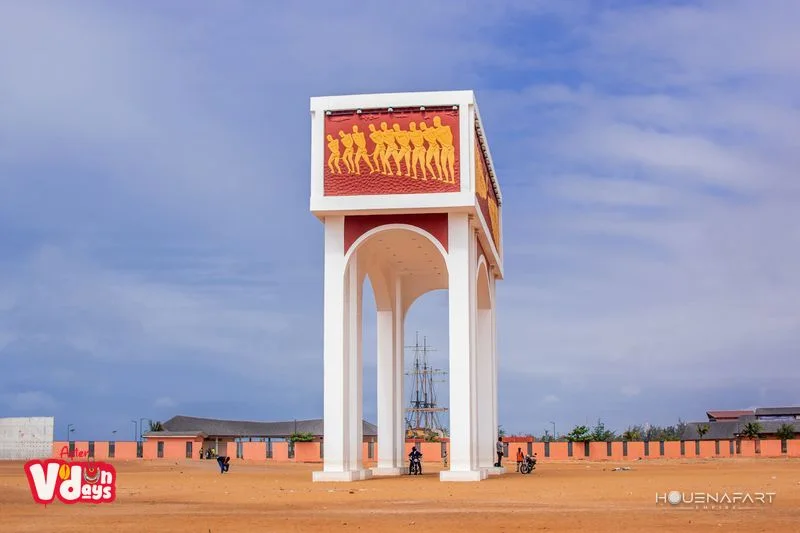
Within that zone, one town carried more departures than any other. The kingdom of Hueda had its port here. The kingdom of Dahomey, which took Ouidah in 1727, sent its captives down to this beach. The Door of No Return stands where the water begins.
A low percentage is a distant ancestor, not a weak one
One ancestor eight generations back leaves a very small share of your genome. That ancestor was a whole person, with a name, a language, a lineage. One per cent is not a rounding error. It is a great-great-great-great-great-grandparent who walked somewhere real.
What the percentage will never do
It will not name your family. It reads regional affinity, not civil registers that were never written. Anyone who promises you a household from a saliva sample is selling you something.
The corridor is still legible on the other side of the Atlantic: the Jeje and Ketu nations of Brazilian Candomble, the Rada rite of Haitian Vodou, the Arara lineage of Cuba. They carry the names of peoples and towns that still stand here.
The peoples behind the label
Benin & Togo people is one of the questions most asked after a result. Here are the main groups of that space, where they live today, and the names they kept across the ocean.
| People | Where they live today | Across the Atlantic |
|---|---|---|
| Fon | The Abomey plateau, heart of the kingdom of Dahomey | Candomble Jeje (Brazil), Rada rite (Haiti) |
| Hueda (Xweda) | The coast around Ouidah, kingdom of Hueda until 1727 | The name Whydah, Ajuda, Uida in old records |
| Adja | The Tado cradle, on both banks of the Mono river | Allada, remembered as Arada, Rada and Arara |
| Gun | Porto-Novo and the lagoon | Gbe languages close to Fon |
| Ewe | Southern Togo and eastern Ghana | Ewe communities of the diaspora |
| Mina (Guin) | The Togo coast around Aneho | Tambor de Mina and the Costa da Mina (Brazil) |
| Mahi | Central Benin, around Savalou | Candomble Jeje Mahi (Brazil) |
| Yoruba (Nago) | Eastern Benin, around Ketou, and Nigeria | Nago and Ketu nations (Brazil), Lucumi (Cuba) |
These links are carried by names, rites and memory. They describe a shared space, not a guaranteed personal line.
Which DNA test answers which question?
There is no single best DNA test for Africa. They answer different questions, and knowing which one you took changes how you read it.
Ethnicity estimates
AncestryDNA, 23andMe, MyHeritage compare your whole genome to reference panels and return regions such as Benin & Togo. Useful for a broad map. The estimates are recalculated when the panels grow, so your percentages can change from one update to the next.
Lineage tests
Some companies, such as African Ancestry, read a single line, your mother's mother's line or your father's father's line, and compare it to present-day African groups in their database. Precise on that one line, silent on the thousands of other ancestors in your tree.
Tests for a nationality file
For Beninese nationality under Law 2024-31, a DNA test counts only if it is performed by a body recognized by the Republic of Benin. Check the official portal before relying on a consumer kit.
We do not recommend any laboratory and receive nothing from any of them.
From a percentage
to a real reconnection.
01
You took the test
The result says Benin, Nigeria, Togo, Ghana. You have a percentage. A number. Not yet a story.
02
You look for the meaning
The test did not give you a lineage name, a guardian deity, the memory of your ancestors. It gave you a postcard. Ouidah is the address on it.
03
You come to Ouidah
The town through which more than a million Africans were shipped across the Atlantic. The place of the fracture, and today, the place of return.
04
You leave whole
Received by a family, heard by elders, the Door of No Return crossed in the other direction. A belonging no one can take from you.
What no DNA lab
can ever give you.
A reception, not a visit
An interview before you come, so your story arrives before you do. Then the elders of the neighbourhood, who hear it in person.
A Fa reading, on site
The Fa is the divination system of Vodun. A bokonon reads a spiritual path, never at a distance, never announced in advance. When a Fa reading and a DNA result land on the same cultural area, we say so plainly.
The Slave Route, walked
Four kilometres from the auction square to the beach. Walking it is an act of memory no museum, book or algorithm can replace.
A place to come back to
The families of ONG Wa Afriki keep in touch after you leave. The return does not end at the airport.
Your DNA can become part of a nationality file
Since Law 2024-31, descendants of deported Africans can apply for Beninese nationality. A DNA test from a body recognized by Benin is one of the accepted proofs, alongside civil records and authenticated testimony. The process is online, costs 100 dollars, and nationality is granted on proof of a stay in Benin within three years.
How Beninese citizenship works →And the question that always comes after the result, rarely out loud: will they see me as one of them when I arrive? We answer it plainly.
Some ancestors can be named. The Clotilda, the last slave ship known to have reached the United States, sailed from Ouidah in 1860, and its survivors founded Africatown, in Alabama. The Clotilda, from Ouidah to Africatown.
Your questions
What does a Benin & Togo DNA result mean?
It names a region, not a country. The zone covers the Fon, Adja, Ewe, Gun, Mina, Hueda and Mahi peoples and part of the Yoruba world, across borders drawn in 1885. Ouidah, which shipped more than one million captives, sits at its centre.
Who are the Benin & Togo people?
Mainly the Gbe-speaking peoples, Fon, Adja, Ewe, Gun, Mina, Hueda and Mahi, plus the Yoruba of eastern Benin. In the Americas their names survive in the Jeje and Ketu nations of Brazil, the Rada rite of Haiti and the Arara lineage of Cuba.
What is the history of the Benin & Togo region?
It is the land of the kingdoms of Allada, Hueda and Dahomey, whose capital was Abomey. Dahomey took Ouidah in 1727. The coast became known in Europe as the Slave Coast, and about two million captives were embarked from the Bight of Benin.
My result shows only 1% Benin & Togo. Does it count?
Yes. One ancestor eight generations back leaves a very small share of your genome, and that ancestor was a whole person with a name and a lineage. A low percentage means a distant link, not a weak one.
Why do regions overlap, like Benin & Togo, Nigeria, Ghana?
Because neighbouring peoples share a great deal of ancestry and reference panels are built from present-day samples. Overlapping results along the coast are normal. They point to a corridor, not to one village.
Can a DNA test find my exact family in Benin?
No, and anyone promising it is selling you something. Genetic tests read regional affinity. They cannot read registers that were never written or name a household.
What is the best DNA test for African ancestry?
None is best for everything. Ethnicity estimates map your whole genome by region, lineage tests read one maternal or paternal line precisely. For a Beninese nationality file, only a test performed by a body recognized by Benin counts.
Can my Benin & Togo percentage change?
Yes. Testing companies recalculate estimates when their reference panels grow. A region can grow, shrink or split between two updates. The coast it points to does not move.
Does a DNA test count for Beninese citizenship?
It can, if the test is performed by a body recognized by the Republic of Benin. Civil records and authenticated testimony are also accepted. The application is made only on the official portal myafroorigins.bj.
I am African American, Haitian, Brazilian or Caribbean. Is After Vodundays for me?
Yes. The Benin & Togo corridor fed the Americas for two centuries. No prior knowledge of Vodun is needed: the programme is built to receive the diaspora, including those who first heard of Benin through their DNA result.
Your DNA showed you the coast.
Ouidah shows you its faces.
The descendants of the same tradition, in the same neighbourhoods, keeping the same rites. That is not a tour anyone can sell. It is a network of trust that ONG Wa Afriki has built family by family, and the people who receive you are paid directly, without middlemen.
Coming to Ouidah
In Ouidah, ONG Wa Afriki (No. 0108/MISP) accompanies travellers who wish to approach this tradition with its guardians. Its After Vodundays programme welcomes them from January 4 to 14, 2027, 11 days and 10 nights, with an optional year-end stay at the Palais d'Agondji, December 30 to January 3, around the Vodun Days (January 2 to 9).
WhatsApp +229 01 61 70 36 66 · contact@aftervodundays.com
Write to ONG Wa Afriki →