The Return · Guadeloupe · Martinique · Haiti · Caribbean · Americas
You, whom they call West Indian.
Here, we call you the children who return.
Guadeloupe, Martinique, Haiti, French Guiana, the whole Caribbean, the Americas. Part of your lineage left by this coast. The Return is the protocol that gives you back what the registry does not say: a Fa consultation, a community in Ouidah that recognizes you, a name, a place within a Beninese family. This is not a stay. It is a filiation.
12.4 M
Africans deported between the 16th and 19th centuries
1 M+
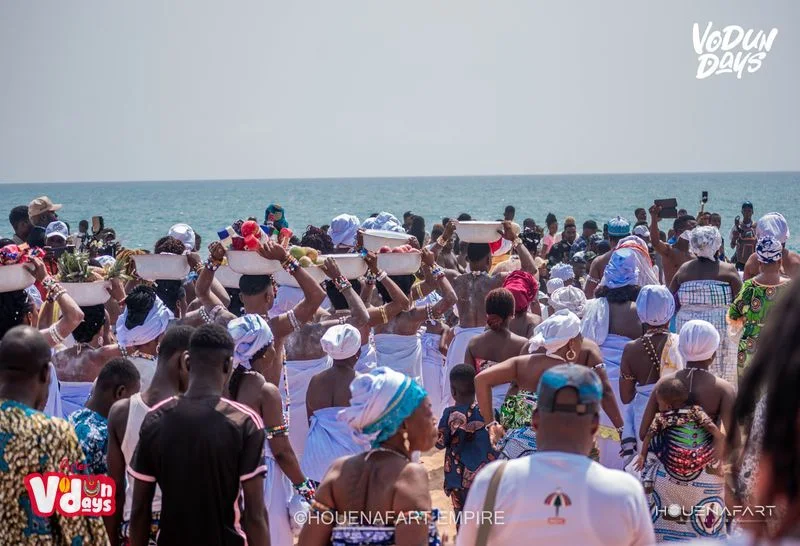
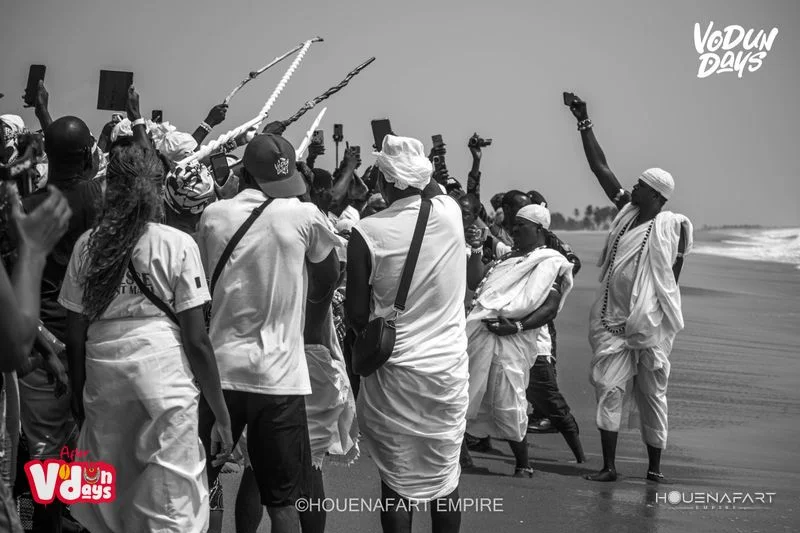
embarked from the beach of Ouidah
1848
the year the registry handed out your names
1
community recognizes you, yours
You come from here
Every island, every shore,
the same point of departure.
The Slave Coast: that is what the ships called this shore. Ouidah was its major port, one of the main gateways of embarkation toward Saint-Domingue and the Antilles. What each territory has kept, this coast saw leave.
Guadeloupe
Mémorial ACTe · May 27 · GwokaThe Mémorial ACTe, in Pointe-à-Pitre, tells the story of deportation. Ouidah tells the story of embarkation. On May 27, you commemorate abolition. Here, we hold the other end of the thread: the land before the ships. Sonjé.
Martinique
May 22 · Césaire · Return to the Native LandCésaire wrote the return to the native land. On May 22, you remember. But one return remains that the poet never had time to make: the one to the land before, the land of the Zansèt. It begins on this coast.
Haiti
Bois Caïman · 1804 · Nan GinenYour ancestors swore an oath at Bois Caïman and made 1804 happen, the first Black republic in history. Their strength came from here: Haitian Vodou is the direct child of the Vodun of this coast. Nan Ginen is not a legend. It is an address.
French Guiana
Neg Mawon · BushinenguéThe Bushinengué and the Neg Mawon chose the forest over chains. The freedom your ancestors reclaimed, this land remembers it as a family pride.
United States
Sankofa · Year of Return · RootsSankofa: go back and get it. You did the Year of Return in Ghana, you read Roots. Benin is the chapter history still owes you: the coast the ships departed from, and the families who never stopped waiting.
Brazil
Bahia · Candomblé · Agouda FamiliesSalvador de Bahia still prays to the same deities. And Ouidah has its Agouda families, returned from Brazil as early as the 19th century. The path of return has existed for 200 years. It passes through here.
Cuba
Regla de Ocha · IfáIn the Regla de Ocha, the elders say the orishas crossed the ocean with the captives. In Ouidah, we show you where they departed from. And who, here, still carries their names.
What the registry never wrote
Your family name dates from 1848.
Your lineage dates from long before.
At abolition, in the registries of the newly freed, civil registrars handed out names to the freed people of Guadeloupe and Martinique. Names chosen in a minute. Sometimes an anagram, sometimes mockery, sometimes chance. That name has followed you here. It says what history did to you. It does not say who you are.
The Return exists for the other part: the lineage before the registry. The one no clerk could ever write. Nor erase.
The Path
From a feeling
to a family.
01
The Vigil
Before anything else, a time of purification and reconciliation with the land. You do not arrive as a visitor. You prepare for what follows.
02
The Consultation
A Bokonon questions the Fa. It is only here, in Ouidah, after the vigil, that your cultural area and your community are revealed to you. Never before, never remotely, never from a mere file.
03
The Recognition
A community in Ouidah welcomes you, according to its own rites, those of its lineage. You receive a name. You become, spiritually and culturally, a child of that house.
04
The Bond that Remains
The return does not end at the airport. ONG Wa Afriki remains the bridge between you and your Ouidah family, for annual rituals and news, for as long as you wish.
The words you already carry
On social media, you write
#RetourAuxSources. #Sankofa. #NanGinen.
These words circulate from Pointe-à-Pitre to Port-au-Prince, from Fort-de-France to Atlanta. They all mean the same thing: the path of return was never closed. Here, these words have an address.
Sonjé
Kréyol
Remember. The word etched into Caribbean memory.
Sankofa
Adinkra
Go back and get it. It is never too late to reclaim what was left behind.
Nan Ginen
Haiti
The Africa where souls return. For your ancestors, this was not a metaphor. It was a direction.
Neg Mawon
Antilles
The one who reclaimed their freedom. The figure the whole Caribbean honors.
Zansèt
Kréyol
The ancestors. Those whose name is missing from the registry, not from the lineage.
Retour aux sources
Diaspora
The word you type. The path we keep.
A question we're often asked
The Fa decides.
Science, sometimes, confirms.
Many of our Descendants arrive with a DNA test result. A region. A percentage. We receive it with respect. But it is never what designates your family. Only the Fa has that authority, once you are here, after the vigil. When the region indicated by science matches the cultural area revealed by the Fa, it is a sign that honors us all. It happens. We never promise it in advance.
Access
A protocol,
never a mass product.
The Return
Starting at €4,000
Individual protocol, by quote
The price does not cover hotel nights. It covers what no amount of money normally buys: the recognition of a Beninese family, carried by years of fieldwork in Ouidah, under the supervision of the city's elders and guardians of tradition. Each protocol is unique, built around your situation and your schedule.
- •Dedicated Fa consultation and vigil purification
- •Recognition by a community in Ouidah, integration ceremony
- •Individual guidance, dedicated guide and referent
- •Ongoing support for your bond with your Ouidah family, over time
- •Lodging, meals and transport included
Your recognition directly funds the community that welcomes you.
The diaspora's questions
What African country do Caribbean people come from?
There is no single answer: slave-trade records show embarkations from Senegambia, the Gold Coast, the Bight of Benin and Central Africa. But for the French Antilles and Saint-Domingue, the coast of the Bight of Benin, which ships called the Slave Coast, was one of the main gateways of embarkation. Ouidah was its major port. That is why Haitian Vodou still speaks Fon, and why the orishas survived in Cuba and in Bahia.
I'm from Guadeloupe or Martinique: did my ancestors pass through Ouidah?
It's possible, and for many families, partly likely. More than a million captives were embarked from this beach. What The Return offers you is not archival proof: it is a living recognition, that of a community in Ouidah that welcomes you according to the word of the Fa, on the very land of departure.
How do we know which family is mine?
The Fa reveals it, once you are in Ouidah, after the purification rituals of the vigil. It is never determined remotely, never before your arrival, never based on your name alone.
Is The Return based on a DNA test?
No. Only the Fa designates your community. If you already have a DNA test result (Ancestry, 23andMe, MyHeritage, African Ancestry), keep it carefully: when the region it indicates matches what the Fa reveals, it is a sign that honors us. But it is never the method itself, and we never promise it in advance.
Is Haitian Vodou and Benin's Vodun the same thing?
It is a sister tradition, born from the same trunk. What your ancestors carried in the ships' holds, they replanted in Saint-Domingue under other names. Returning to Ouidah, for a servant of Haitian Vodou, is going back to the root of the tree. The Bokonons here recognize their brothers over there.
Does this recognition give me rights to land or an inheritance in Benin?
No, never. This is a recognition of a spiritual and cultural nature. It opens, in either direction, no civil, property or inheritance rights. That is precisely what makes it pure: no one gains anything from it but a family.
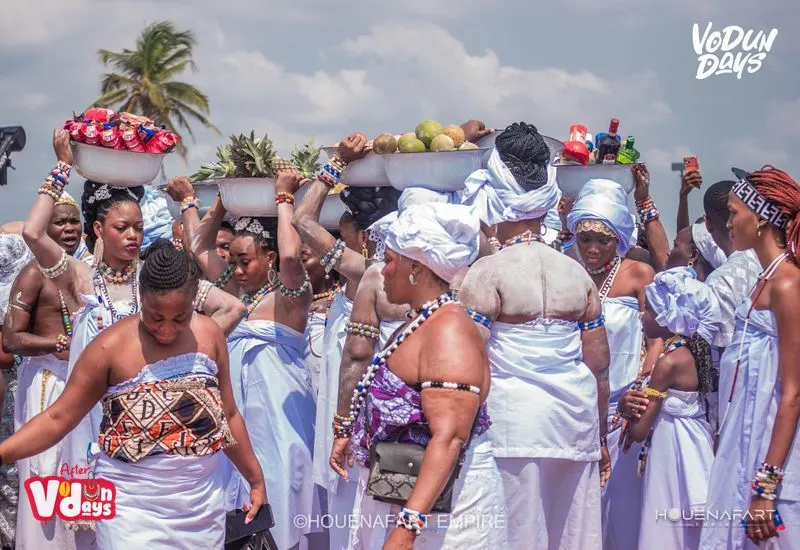
Can I experience The Return during the Vodun Days or a Circuit 365?
Yes. The Return can be experienced as a standalone protocol, at any time of year, or integrated into a Vodun Days or Circuit 365 stay already planned. Simply specify it in your request.
What happens once I'm back home?
The bond does not stop at the airport. ONG Wa Afriki remains the bridge between you and your Ouidah family, for annual rituals and news, for as long as you wish. Many of our Descendants call their family head on the calendar's major dates.
To go further: your DNA test says Benin, now what? · the Haitian diaspora in Ouidah · the Caribbean and the memory of Ouidah · Beninese nationality for Afro-descendants
Before the programme, an older and heavier question: will you be recognized as one of us when you arrive? We answer it with nothing softened.
The 1848 registry wrote what was taken from you.
In Ouidah is written what belongs to you.
No travel agency in the world can organize this protocol: access to Ouidah's communities rests on years of fieldwork by ONG Wa Afriki and on the trust of the city's elders, impossible to buy. Access remains individual, never mass. This family already exists. It simply does not know your name yet.