Discover · Institution · Living Tradition
FRABO:
the fraternity that does not yield.
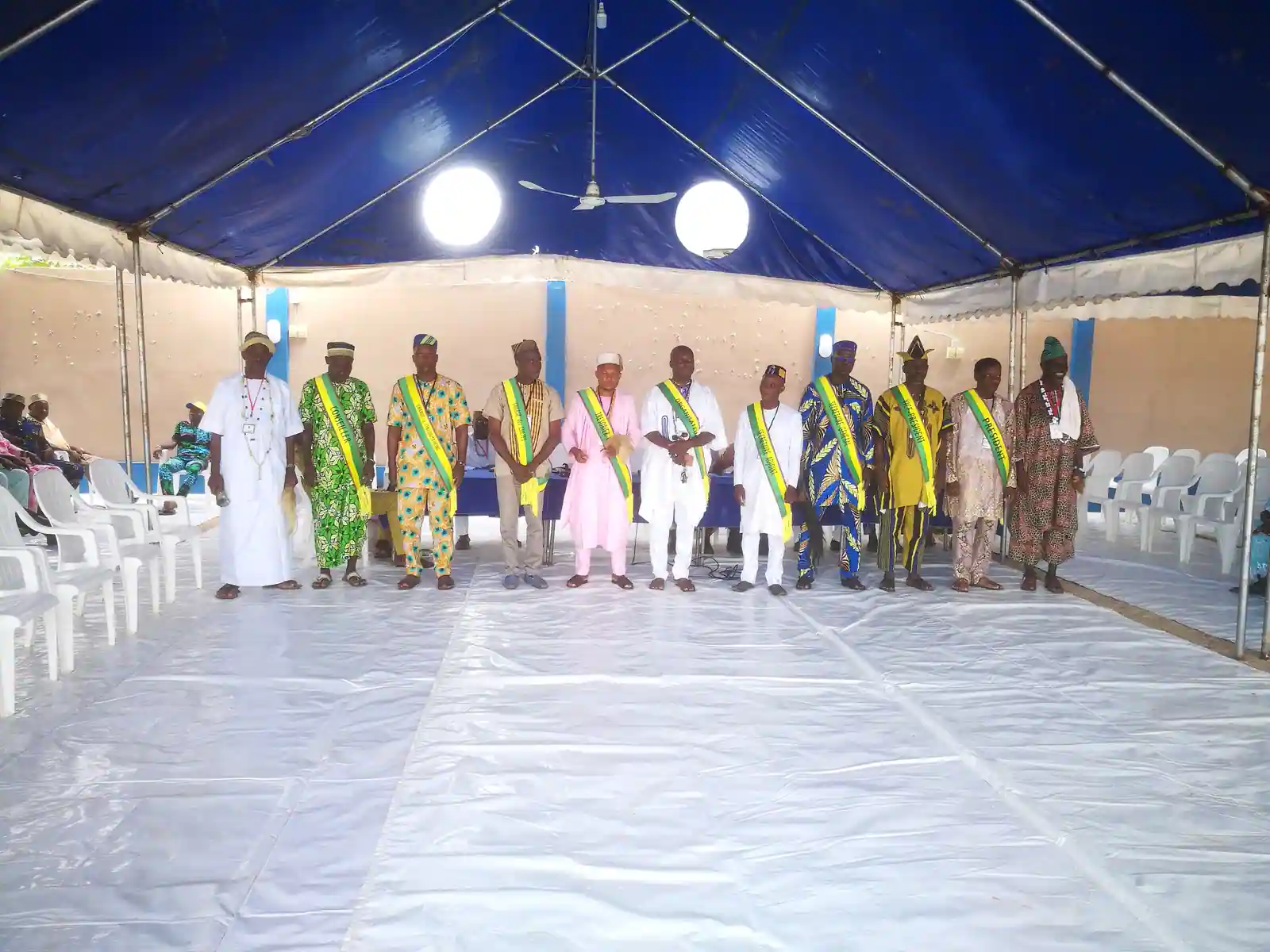
Fraternité des Bokonons, Babalawos et Olouwos. N°030/MISP. The institution uniting the guardians of Fa across three continents, from Ouidah.
Bokonons · Babalaôs · Olouwos · Benin · Nigeria · Cuba · Brazil · Haiti
FRABO is not visited. It is approached through trust, respect and real presence. After Vodundays is one of the rare structural points of access to this network, without intermediaries, without filters.
The Institution
The fraternity that reunites what history had separated.
Fraternité des Bokonons, Babalawos et Olouwos. N°030/MISP. This official registration number with Benin's Ministry of the Interior and Public Security is not an administrative footnote. It is proof that what survived centuries of colonization, prohibition and denial managed to formalize itself as a recognized institution, without losing any of its depth.
The Bokonons of Benin and Togo. The Babalaôs of Nigeria, Cuba, Brazil, the United States. The Olouwos, initiating masters, who carry the tradition's deepest corpora. These three lineages, separated for centuries by the routes of the slave trade and colonial borders, meet again in FRABO under one institutional status.
This is not a merger. It is not syncretism. It is a mutual recognition between practitioners who know where they come from, and who decided to officially recognize each other as guardians of the same memory.
The Mission
Passing on what cannot be lost.
FRABO's mission rests on three inseparable pillars. The first is transmission: ensuring new Bokonons are trained under the full protocols, with recognized masters, with intact oral corpora. Transmission is always oral. Not because writing is forbidden, but because what is learned in a direct relationship with a master cannot be reduced to a text without losing what matters most.
The second pillar is protection. The Fa tradition today faces two symmetrical threats: commercialization that empties it of its content to turn it into a consumer product, and institutional rejection that marginalizes it in its own countries of origin. FRABO answers both: by certifying legitimate practitioners, it protects the public from impostors. By existing officially, it protects the tradition from invisibility.
The third pillar is reunification. Cuban Babalaôs practicing Regla de Ocha. Brazilian Candomblé communities. Haitian Vodouists. All carry the same transatlantic memory. FRABO works to rebuild the bridges the slave trade broke, not to standardize, but so every branch can find its root again.
Fa & Diaspora
The same tree. Three continents. One root.
You have to grasp what this means: for more than three centuries, men and women initiated into Fa were forced onto slave ships right here in Ouidah, on the very coast you stand before today. They had memorized entire corpora of verses, myths, prescriptions. They could carry nothing else. They carried that.
In Cuba, Fa became the Orisha-Ifá of Regla de Ocha. In Brazil, Candomblé's Babalaôs passed down the same Odù under slightly altered names. In Haiti, the structures of Haitian Vodou carry direct correspondences with Ouidah's Fa. These traditions survived bans, persecution, the destruction of temples. They survived because they lived in people's heads, not in books.
When a member of the Haitian or Brazilian diaspora arrives in Ouidah for the first time and meets a FRABO Bokonon, something happens that has no name in any language. A recognition. Not intellectual, something deeper. They are finding again the tree they were a branch of.
Ouidah & FRABO
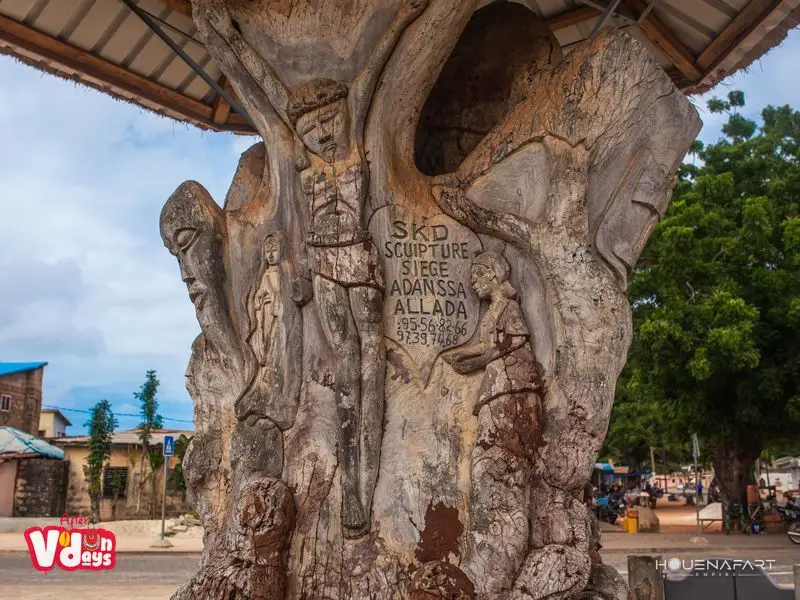
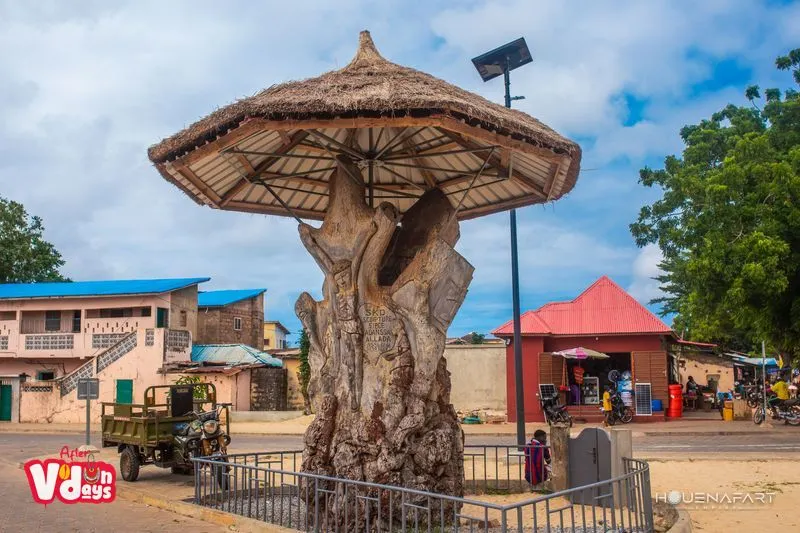
Here, the tradition has an address.
Ouidah is not just any setting for FRABO. It is the city where hundreds of families from across the West African coast settled over centuries, each with its own Vodun, its own Bokonons, its own corpora. Nowhere else in West Africa is the density of active traditions per square kilometer comparable.
It is also the city of the Slave Port, the exact place where millions of men and women crossed the Door of No Return. FRABO being based here is no geographic accident. It is a symbolic and political position: we are where it all began. We are where it all begins again.
After Vodundays places its participants within this continuity. Meeting a FRABO Bokonon in Ouidah means standing at the convergence point of all these histories, that of precolonial Africa, that of cultural resistance during the slave trade, and that of the reunification the global diaspora is now building.
Access · Network · Trust
Meet the guardians of the tradition. Not just observe them.
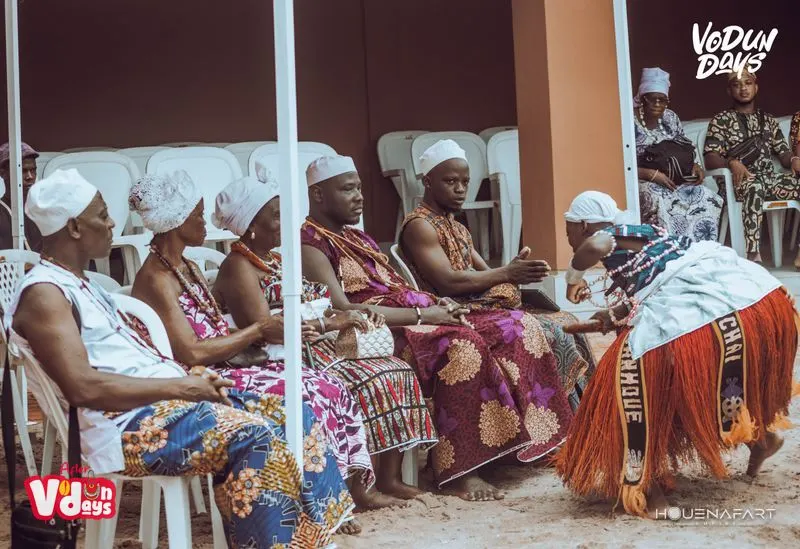
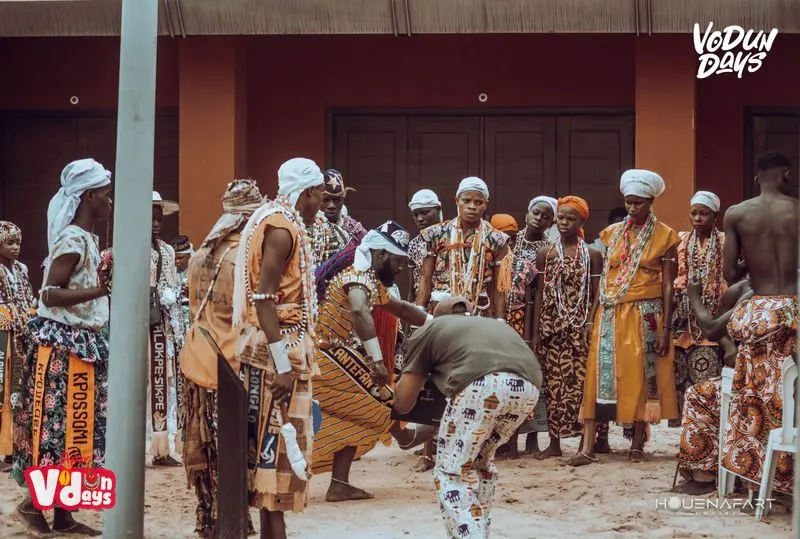
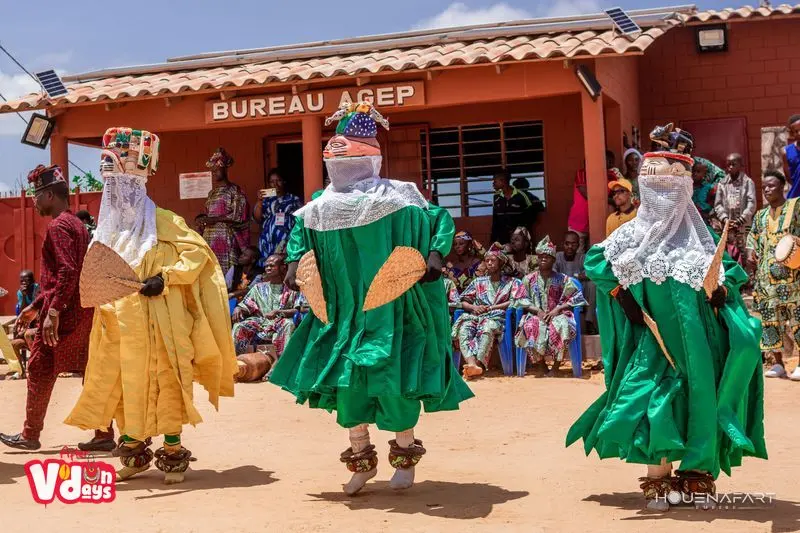
After Vodundays is one of the only settings where FRABO members are present for real exchanges with diaspora participants. Not a performance event. A space of reunion between people who share the same memory and recognize it.
Questions · FRABO & Tradition
What you're wondering.
What does FRABO mean?
Fraternité des Bokonons, Babalawos et Olouwos, the Fraternity of Bokonons, Babalawos and Olouwos. Three names, three traditions, one shared source: the Fa oracular system. Bokonons are Fa priests in Benin and Togo. Babalaôs are their equivalents in Nigeria and the Yoruba diaspora, Brazil, Cuba, the United States. Olouwos are the initiating masters, guardians of the deepest corpus. FRABO unites these three lineages under one institutional roof, registered under number N°030/MISP.
What is FRABO's role in the Fa tradition?
FRABO carries out three functions. Transmission: setting the training standards for new Bokonons, making sure oral corpora are passed on without alteration. Recognition: identifying and certifying legitimate practitioners, protecting the tradition against impostors and corrupted practices. Diplomacy: coordinating ties between African tradition-holders and those of the diaspora, Cuba, Haiti, Brazil, the United States, France. It does not manage a belief. It administers a heritage.
What is the relationship between FRABO and After Vodundays?
After Vodundays draws on FRABO's network to offer authentic Fa consultations, led by recognized practitioners trained under the full protocols. This is not a tourist demonstration. It is real access, made possible because ONG Wa Afriki and its partners sit within FRABO's institutional continuity. Visitors from the Haitian, Brazilian or Cuban diaspora can access a Bokonon in Ouidah, and recognize in his practice the same memory they inherited under other names.
Is there a link between FRABO and the Yoruba Ifá recognized by UNESCO?
Yes. Ifá, the Yoruba name for the same system, was inscribed on UNESCO's Intangible Cultural Heritage list in 2005. Benin's Fa shares the same origin. The oral corpora show direct correspondences between the 256 Odu of Fa and the 256 Odù of Ifá. FRABO works to get the Beninese specificity of this tradition recognized, distinct without being separate from the Yoruba tradition. These are two branches of the same tree. Ouidah is one of its oldest roots.
How does FRABO protect the tradition against corruption?
Through training and certification. A Bokonon recognized by FRABO has trained under an accredited master, following protocols whose length and content are regulated. There is no such thing as a self-taught Bokonon in the tradition. Legitimacy is transmitted, never self-proclaimed. This protects consultants from impostors and protects the tradition itself from a decline that, elsewhere, has already reduced millennia-old systems to performance acts.
Can you meet FRABO members during After Vodundays?
This is one of the rarest aspects of After Vodundays. Bokonons who are FRABO members are present at certain editions for exchanges, consultations, and sometimes partial transmissions open to participants. These moments are not announced in advance in a fixed program. They arise according to availability and affinity. It is one of the things no standard tourist circuit can promise, because they are not for sale. They are earned through presence and seriousness.